
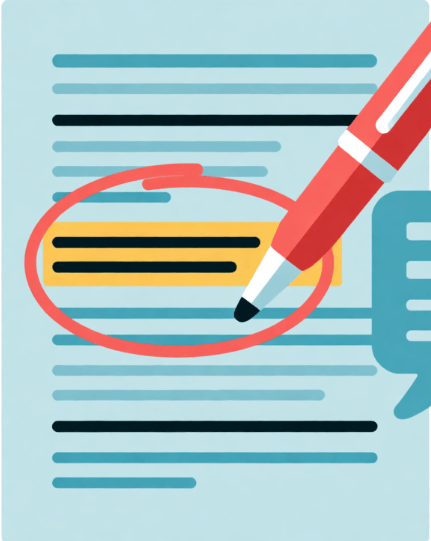
Your professor handed back the paper with one line circled in red: “This is patchwriting — rewrite in your own words.” You stare at the sentence. You changed the verbs. You swapped in a few synonyms. You even reordered a clause. And yet the comment sits there, unmoved, because fix patchwriting is not a phrase most students ever hear until the moment it costs them marks. If you searched for how to fix patchwriting because a rubric, a supervisor, or a Turnitin similarity report flagged your paraphrase as “too close to the source,” you’re in the right place — and you’re not the first student this has happened to.
What Patchwriting Actually Means (And Why It’s Not the Same as Plagiarism)
Patchwriting happens when you take a source sentence, keep its structure, and swap out a handful of words for synonyms while leaving the original syntax mostly intact. The term was coined by writing researcher Rebecca Moore Howard, who studied how student writers move between summarizing, paraphrasing, and copying when they don’t yet trust their own command of a topic. Patchwriting sits in an uncomfortable middle zone: it isn’t a copy-paste job, but it also isn’t a genuine paraphrase, because the writer hasn’t actually processed the idea into their own mental model before putting it on the page.
Here’s the direct answer if you only read one paragraph of this article: to fix patchwriting, close the source, restate the idea from memory in your own sentence structure, then reopen the source only to check accuracy — never to copy phrasing. That single habit change (read, close, write, check) solves the vast majority of patchwriting flags, because it forces your brain to reconstruct the idea instead of relabeling someone else’s sentence.
Most students who get flagged for patchwriting are not trying to cheat. You’ve probably done exactly what feels like “paraphrasing” — read a sentence, changed three or four words, moved a clause to the end instead of the beginning — and assumed that counted. It doesn’t, and here’s why: academic integrity policies and citation style guides (APA 7, MLA 9, Harvard) define paraphrase as a full restatement of an idea in new language and new sentence architecture, with credit still given to the original source. Swapping “significant” for “considerable” while keeping everything else the same isn’t restating an idea. It’s relabeling one.
Why Does My Professor Call This Patchwriting Instead of Plagiarism?
This is the question that confuses students the most, and it’s worth answering directly. Plagiarism, in most university policies, refers to presenting someone else’s words or ideas as your own without acknowledgment — a clear-cut integrity violation. Patchwriting is different in intent but similar in surface appearance, which is exactly why professors flag it separately. A student who patchwrites has usually cited the source. The citation is there. The problem is that the sentence structure underneath the citation is still borrowed, which means the writing hasn’t demonstrated that you understood and reprocessed the material.
Purdue OWL, one of the most widely cited academic writing resources in the world, distinguishes paraphrase from patchwriting on exactly this basis: a paraphrase should be understandable without ever seeing the original passage, while patchwriting only makes sense as a shadow of a sentence you haven’t seen. That distinction is the entire fix. If someone who has never read your source could follow your sentence and understand the idea on its own terms, you’ve paraphrased. If your sentence only “clicks” once compared side-by-side with the original, you’ve patchwritten it.
Supervisors flag patchwriting instead of plagiarism when they can tell — usually from cadence, from an unusually advanced vocabulary word sitting inside an otherwise simple sentence, or from a structure that matches the source almost clause for clause — that you engaged with the source material but didn’t yet trust yourself to explain it independently. It’s a developmental flag, not (usually) a disciplinary one. That’s good news: it means the fix is a writing-process fix, not a crisis-management one.
The Three-Step Method to Fix Patchwriting in Any Paragraph
Here’s the method that reliably works, broken into steps you can apply to a single flagged sentence or an entire section.
- Read the source passage once, then physically close the tab or the book. Don’t keep it visible while you write. This single step does more to fix patchwriting than any synonym swap ever will, because it removes the possibility of unconsciously mirroring the original sentence structure.
- Write the idea from memory, as if explaining it to a classmate who hasn’t read the source. Use whatever sentence shape comes naturally to you — start with the conclusion, start with an example, start with a question. The goal is a structure that belongs to you, not one borrowed from the author.
- Reopen the source and check only for accuracy, not phrasing. Confirm you haven’t distorted a statistic, a date, or a causal claim. Add the citation. Do not adjust your sentence to sound “more like” the source — if anything, push it further away.
Try this on the patchwriting example most students recognize immediately. A textbook might say: “Climate change has significantly altered precipitation patterns across the globe, leading to more frequent and severe weather events.” A patchwritten version looks like: “Climate change has considerably changed rainfall patterns around the world, resulting in more common and intense weather events” — same skeleton, same clause order, synonyms doing all the work. A genuine paraphrase, written from memory after closing the source, might instead read: “Extreme weather is becoming more common partly because climate change is disrupting how and where rain falls (Smith, 2023).” Different structure, same idea, full citation, and — critically — a sentence that would make sense to someone who had never read the original.
How to Tell If a Sentence Counts as Patchwriting Before You Submit
You don’t need to wait for a professor’s red pen to catch this. Run this quick self-check on any paragraph you paraphrased from a source:
| Signal | Likely Patchwriting | Likely Genuine Paraphrase |
|---|---|---|
| Sentence structure | Matches source clause order almost exactly | Different order — starts with your own framing |
| Vocabulary level | One or two unusually advanced words stand out | Vocabulary is consistent with your own writing voice throughout |
| Readable without source? | Only makes full sense if you’ve read the original | Stands alone and makes sense to a new reader |
| How it was written | Source open on screen while typing | Source closed; written from memory, then checked |
If two or more of those “likely patchwriting” boxes describe your paragraph, close the source and rewrite it using the three-step method above before you submit anything. Running this quick patchwriting self-check on every paraphrased paragraph, before you ever hand in a draft, catches most patchwriting long before a supervisor or a similarity report does.
What Does ‘Too Close to the Original’ Actually Mean on a Similarity Report?
Similar to how Turnitin’s AI detection works, Turnitin and similar similarity-checking tools don’t detect intent — they detect matching strings of text. A high similarity score on a properly cited passage often means the underlying sentence structure is still too close to the source, even though the words have been swapped. This is precisely why a citation alone doesn’t solve patchwriting (the line between paraphrasing and plagiarism is exactly this structural distinction): the citation tells the reader where the idea came from, but it doesn’t change how close your sentence architecture sits to the original.
A similarity report flags word strings, not intent — which means a fully cited paragraph can still register as “too close” if the sentence structure hasn’t actually changed. That’s the part most students miss when they see a similarity score and assume the citation should have covered it. Fixing this requires the structural rewrite described above, not just an additional reference or a longer quotation mark.
This same read-close-write-check habit is exactly what fixes a weak thesis statement after feedback too — the fix for both problems starts with rebuilding from your own understanding. One more nuance worth knowing: some instructors distinguish between “patchwriting as a stepping stone” — common in second-language writers or first-year students still building academic vocabulary — and “patchwriting as a shortcut” taken under deadline pressure. Both get flagged the same way on paper, but the fix is identical either way: rebuild the sentence from your own understanding, not from the source’s scaffolding.
Fixing Patchwriting in a Literature Review or Long Research Section
Patchwriting shows up most often in literature reviews and background sections, where students are synthesizing several sources back-to-back and start leaning on each author’s original phrasing just to keep the section moving. The fix scales the same way it does for a single sentence, but with one addition: synthesize across sources before you write a single word.
Instead of paraphrasing Source A, then paraphrasing Source B, then paraphrasing Source C in sequence — which almost guarantees patchwriting because you’re translating one sentence at a time — read all three sources first, close every tab, and write one sentence that captures what they collectively show. “Three separate studies point to the same gap: none of them measured long-term outcomes past twelve months (Lee, 2021; Ortiz, 2022; Chen, 2023)” is impossible to patchwrite, because it was never built from a single sentence in the first place. It was built from your own synthesis of three ideas held in your head at once.
This is also where a lot of otherwise strong writers get tripped up, because synthesis takes more cognitive effort than sequential paraphrase, and under deadline pressure the sequential approach feels faster. It isn’t, once you account for the revision time spent fixing patchwriting flags after the fact. Building the habit of reading-then-closing-then-writing from the start of a literature review saves more time than the revisions needed to fix patchwriting later, and it’s the single most effective way to keep patchwriting out of a synthesis-heavy section altogether.
A Full Before-and-After Rewrite You Can Study
Here’s a longer example, because seeing the fix applied to a full paragraph makes the pattern click faster than any rule on its own.
Original source (hypothetical journal excerpt): “Remote work arrangements have fundamentally transformed organizational communication structures, requiring managers to develop new competencies in asynchronous collaboration and digital trust-building.”
Patchwritten version: “Remote work setups have basically transformed workplace communication structures, requiring managers to build new skills in asynchronous teamwork and digital trust-building.” Notice how little actually changed. “Fundamentally” became “basically.” “Organizational” became “workplace.” The clause order is identical. A reader who compared the two side by side would see almost the same sentence wearing a different coat.
Genuine paraphrase, written from memory: “Managers who lead remote teams face a communication problem their predecessors didn’t: building trust with people they rarely see in person, using tools that strip out most non-verbal cues (Patel, 2023).” This version reorganizes the idea entirely — it leads with the manager’s problem instead of the abstract organizational trend, and it explains the mechanism (fewer non-verbal cues) rather than repeating the source’s vocabulary. It would make sense to a reader who had never seen the Patel study.
You’ve probably noticed the pattern by now: every genuine paraphrase in this article starts from a different entry point than the source sentence does. That’s not a coincidence and it’s not a trick — it’s the natural result of writing from memory instead of writing next to an open source.
Common Mistakes Students Make While Trying to Fix Patchwriting
A few habits quietly undo the three-step method even when students think they’re doing it correctly.
Keeping the source open “just to double-check phrasing” defeats the entire purpose of closing it. If you’re checking phrasing rather than checking facts, you’re patchwriting again, just more slowly. Thesaurus-swapping under time pressure — opening a thesaurus tab and replacing five words in an unread paragraph — produces the exact patchwriting pattern professors are trained to catch, because natural writing rarely reaches for a word like “utilize” or “endeavor” out of nowhere. And translating sentence-by-sentence through a long passage, rather than reading a full paragraph and then writing your own full paragraph, keeps you locked into the source’s structure even when every individual word has changed — which is patchwriting by another name, just spread across more sentences.
The single biggest patchwriting trigger isn’t dishonesty — it’s writing next to an open source instead of writing from a closed one.
The Different Ways Professors Word Patchwriting Feedback
Not every instructor uses the word “patchwriting” on your draft, which is part of why so many students don’t recognize the problem the first few times it happens. You might instead see “insufficient paraphrase,” “over-reliance on source language,” “restate in your own words,” “too closely mirrors the source,” or simply a highlighted sentence with a question mark in the margin. All of these comments are pointing at the same underlying issue: the sentence structure hasn’t moved far enough from the original for the writing to count as genuinely yours. Once you learn to recognize these phrases as patchwriting flags rather than vague style notes, you can apply the same three-step fix every time, regardless of which exact words your professor or TA chooses.
Graduate teaching assistants marking large first-year courses often use shorthand like “SS” (sentence structure) or “PW” in the margin instead of writing out “patchwriting” in full — another reason it helps to know the underlying pattern rather than waiting to see the exact term. If your feedback includes any comment suggesting the wording is “too similar,” “borrowed,” or “needs more distance from the source,” treat it as a patchwriting flag and run it through the read-close-write-check method described above.
It’s also worth knowing that patchwriting flags cluster around specific moments in a paper: the literature review, the background section of a lab report, and definitions pulled from textbooks. These are the sections where you’re summarizing someone else’s established knowledge rather than presenting your own argument, so the temptation to lean on the source’s exact phrasing is strongest. Building the closed-source habit specifically for these sections — even if the rest of your paper is entirely your own analysis — closes most of the gap.
How AssignPro Solution Tutoring Sessions Help With Patchwriting Feedback
If a professor has flagged patchwriting on a draft and the deadline is close, a one-on-one tutoring session can save real time. AssignPro Solution works with students as a coaching and feedback service — a tutor sits down with the specific flagged paragraph, walks through why it reads as patchwriting rather than paraphrase, and helps the student rebuild the sentence using the read-close-write-check method until it’s genuinely their own. The goal in every session is skill transfer, not a rewritten paragraph handed back to the student — the student leaves knowing how to repeat the process independently on the next assignment.
Frequently Asked Questions About Fixing Patchwriting
What is patchwriting in simple terms?
Patchwriting is when you take a source sentence and swap out a few words or phrases while keeping its original structure mostly the same. It looks like paraphrasing but hasn’t actually restated the idea in your own sentence architecture.
Is patchwriting considered plagiarism?
Most university policies treat it as a distinct, usually less severe issue than plagiarism, especially when the source is cited. It’s typically flagged as an academic writing skills gap rather than a misconduct case, though repeated instances can escalate depending on your institution’s policy.
How do I fix patchwriting quickly before a deadline?
Close every source tab, rewrite the flagged paragraph from memory in your own sentence order, then reopen the sources only to verify facts and add citations. This is the fastest reliable method — faster, in the long run, than repeated thesaurus-swapping that keeps getting flagged.
Will Turnitin still flag a paragraph after I fix patchwriting?
Not if the sentence structure has genuinely changed. Turnitin matches strings of text, so a properly restructured paraphrase with new sentence architecture and accurate citation will not register as a close match, even when the underlying idea and source are identical.
Can patchwriting happen even when I cite the source correctly?
Yes. Citation tells the reader where an idea came from; it doesn’t address whether your sentence structure is still borrowed from that source. Both the citation and the structural rewrite are needed.
Why do I patchwrite more in sections I understand least?
It’s a common pattern — when you’re less confident about a topic, you tend to lean more heavily on the source’s exact framing because you don’t yet trust your own way of explaining it. Reading a passage twice and summarizing it out loud before you write often breaks this pattern.
Does patchwriting count as academic misconduct at Canadian universities?
Policies vary by institution, but most Canadian and international universities treat a first patchwriting flag as a learning-and-writing issue addressed through instructor feedback rather than a formal misconduct hearing. Repeated or severe cases can be escalated, so it’s worth fixing the pattern the first time it’s flagged rather than treating it as a one-off comment to ignore.
How is patchwriting different from summarizing a source?
A summary condenses a source’s overall point in far fewer words and in your own structure. Patchwriting keeps roughly the same length and sentence order as the original passage, just with individual words swapped — which is why it reads as borrowed even when it’s technically shorter than the source.
Fixing patchwriting — genuinely fixing patchwriting, not just running a thesaurus over it — is less about vocabulary and more about sequence: read, close, write, check. Once that order becomes a habit, the same paragraphs that used to come back with a red “patchwriting” comment start coming back clean — not because you learned fancier words, but because you finally started writing from your own understanding instead of someone else’s sentence. If you’re staring down a flagged draft tonight, work through one paragraph at a time with the three-step method, and know that every student who’s ever gotten this comment has fixed it the exact same way. AssignPro Solution offers tutoring sessions built specifically around moments like this — helping students understand feedback like “patchwriting” and build the paraphrasing skill so it doesn’t come up again on the next paper.
Related reading you may find useful: