
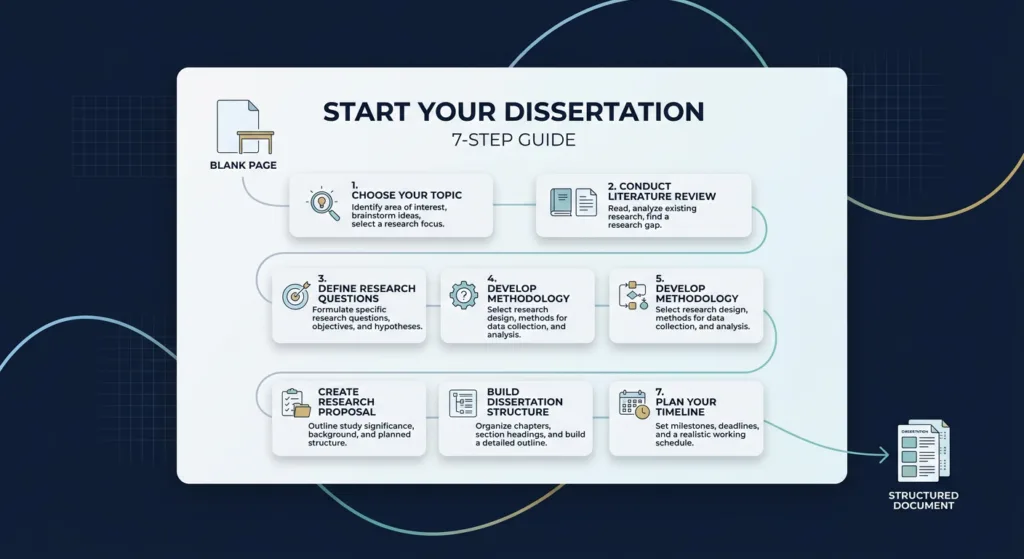
Most students have everything they need — an approved topic, a supervisor, access to academic databases, and months ahead of them. And yet, they cannot start writing a dissertation.
The cursor blinks. The blank page stays blank. Days pass.
This is not laziness. It is the paralysis that comes from not knowing where to begin. When you do not have a system, start writing a dissertation feels impossible — like trying to eat an elephant in one bite.
This dissertation writing guide is built for exactly that moment. Whether you are a final-year undergraduate or a postgraduate student in the UK, Australia, or Canada, this 7-step system will show you how to start writing a dissertation — from locking in your research question to completing your first chapter with confidence.
Coventry University’s thesis submission guidance confirms that students who struggle most are those who begin without a defined structure — not those who lack ability or intelligence.
By the end of this guide, you will know exactly how to start writing a dissertation, what to do first, and how to keep moving forward without losing momentum.
Table of Contents
- Why Most Students Cannot Start Writing a Dissertation
- How to Start Writing a Dissertation: 7-Step System
- What to Do in the Next 2 Hours to Start Writing a Dissertation
- Common Dissertation Writing Mistakes to Avoid
- Dissertation Mini Template
- When to Seek Dissertation Help
- Frequently Asked Questions
- Conclusion
How to Start Writing a Dissertation: The Short Answer
If you want to start writing a dissertation but do not know where to begin, here is the process in plain terms:
- Lock in a focused, researchable research question before you write a single word
- Understand your dissertation structure — introduction, literature review, methodology, findings, conclusion
- Start writing a dissertation from the chapter you understand best, not necessarily the introduction
- Set a daily word target and treat every writing session like a scheduled work shift
- Engage your supervisor early and often — do not wait until you have something “perfect” to show
- Track your progress weekly so you can see momentum building, even on slow days
- Know when the process exceeds your current capacity and get structured support immediately
This is the skeleton. Every point above is expanded in the 7-step system below. If you are serious about how to start writing a dissertation the right way, do not skip any step.
Why Most Students Cannot Start Writing a Dissertation
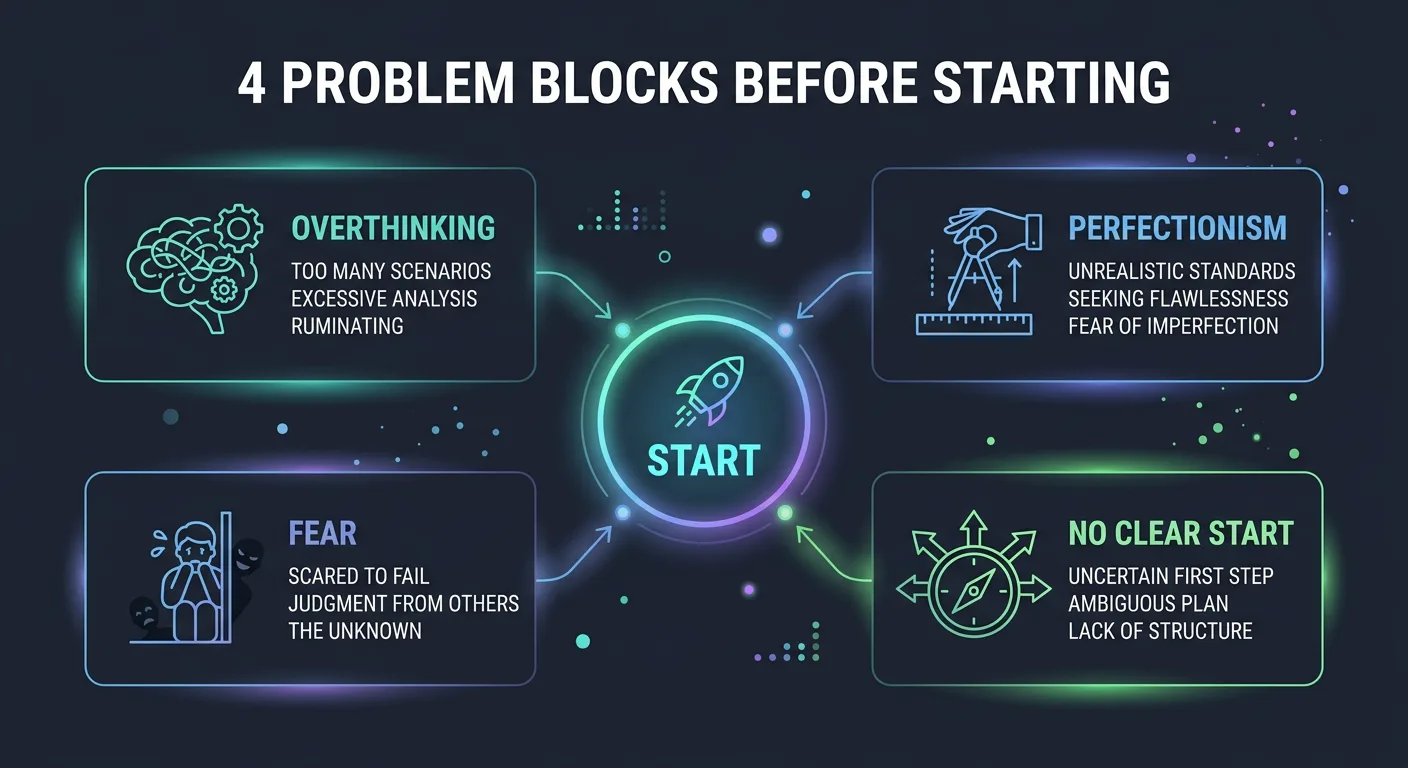
Starting a dissertation feels different from any other academic task. An essay has a clear prompt. A report has a fixed format. A dissertation hands you a blank canvas and says — figure it out.
That gap between “I have a topic” and “I have a first sentence” is where most students lose weeks, sometimes months. Understanding why you cannot start writing a dissertation is the first step to actually doing it.
Here is what is actually happening psychologically:
Perfectionism paralysis — Students wait for the perfect idea, the perfect source, the perfect moment to start writing a dissertation. That moment never comes. The dissertation never starts. The solution is to begin badly and improve — not to wait for readiness that will not arrive on its own.
Scope overwhelm — A 10,000 to 15,000 word document feels impossible to hold in your head at once. So the brain refuses to begin at all. Breaking it into five chapters — each with its own job — makes start writing a dissertation feel manageable instead of terrifying.
Fear of supervisor rejection — Many students avoid writing because they are afraid their supervisor will tear it apart. So they delay, hoping more research will make them ready. In reality, supervisors expect imperfect drafts. That is what the supervision process is designed for.
No clear first step — This is the most common reason students cannot start writing a dissertation. They do not know what to write first, so they write nothing. The 7-step system in the next section solves this directly by giving you a defined starting point, not an open-ended one.
Comparison anxiety — Students look at peers who appear further ahead and conclude they are already behind. This compounds the paralysis. Every student’s dissertation timeline is different. The only comparison that matters is where you were last week versus where you are today.
If you are already weeks behind and the pressure is building, getting early guidance can make a significant difference. If you are still unable to start writing a dissertation and feel stuck, getting expert guidance early can save you weeks of confusion. Contact AssignProSolution to speak with a dissertation expert before the delay costs you more time.
How to Start Writing a Dissertation: 7-Step System
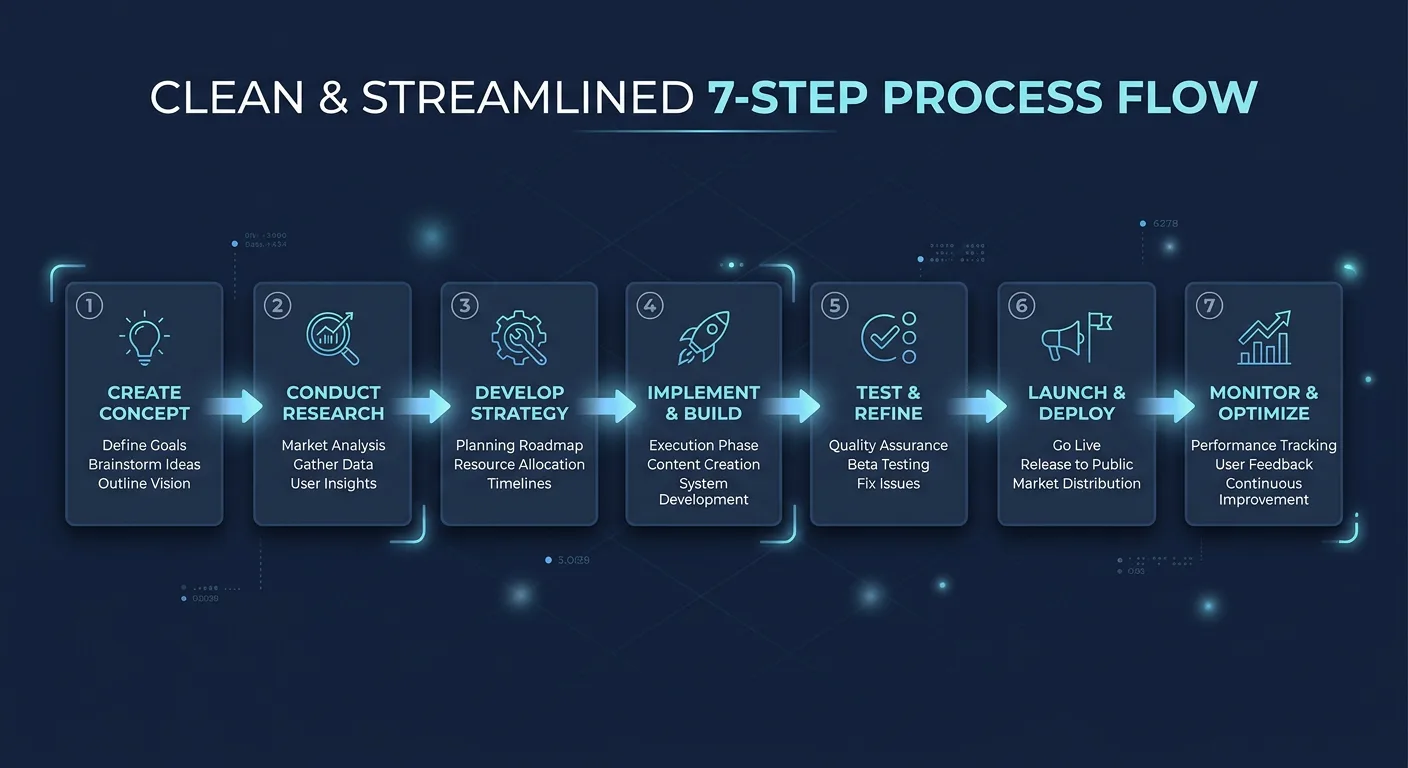
This is the core of the guide. Each step is designed to move you from a blank page to a working dissertation — without overwhelm, without guesswork. Follow these steps in order and you will know exactly how to start writing a dissertation the right way.
Step 1: Lock In Your Research Question Before You Write Anything
Most students make the mistake of jumping straight into writing without a clear research question. This is why they get stuck after the first paragraph.
Your research question is the spine of your entire dissertation. Every chapter, every source, every argument connects back to it. Without it, you are writing in circles.
A strong research question is:
- Specific enough to answer in the word count you have
- Broad enough to find sufficient academic sources
- Original enough to contribute something beyond a basic summary
Bad example: “What is the impact of social media?” Strong example: “How has Instagram use affected body image perception among female university students in the UK between 2018 and 2023?”
Notice the difference. The strong example has a defined population, a defined timeframe, and a defined angle. That specificity is what makes it researchable. When you start writing a dissertation with a question this clear, every chapter writes itself around it.
Do not move to Step 2 until your research question is written down in one clear sentence.
Step 2: Understand Your Dissertation Structure First
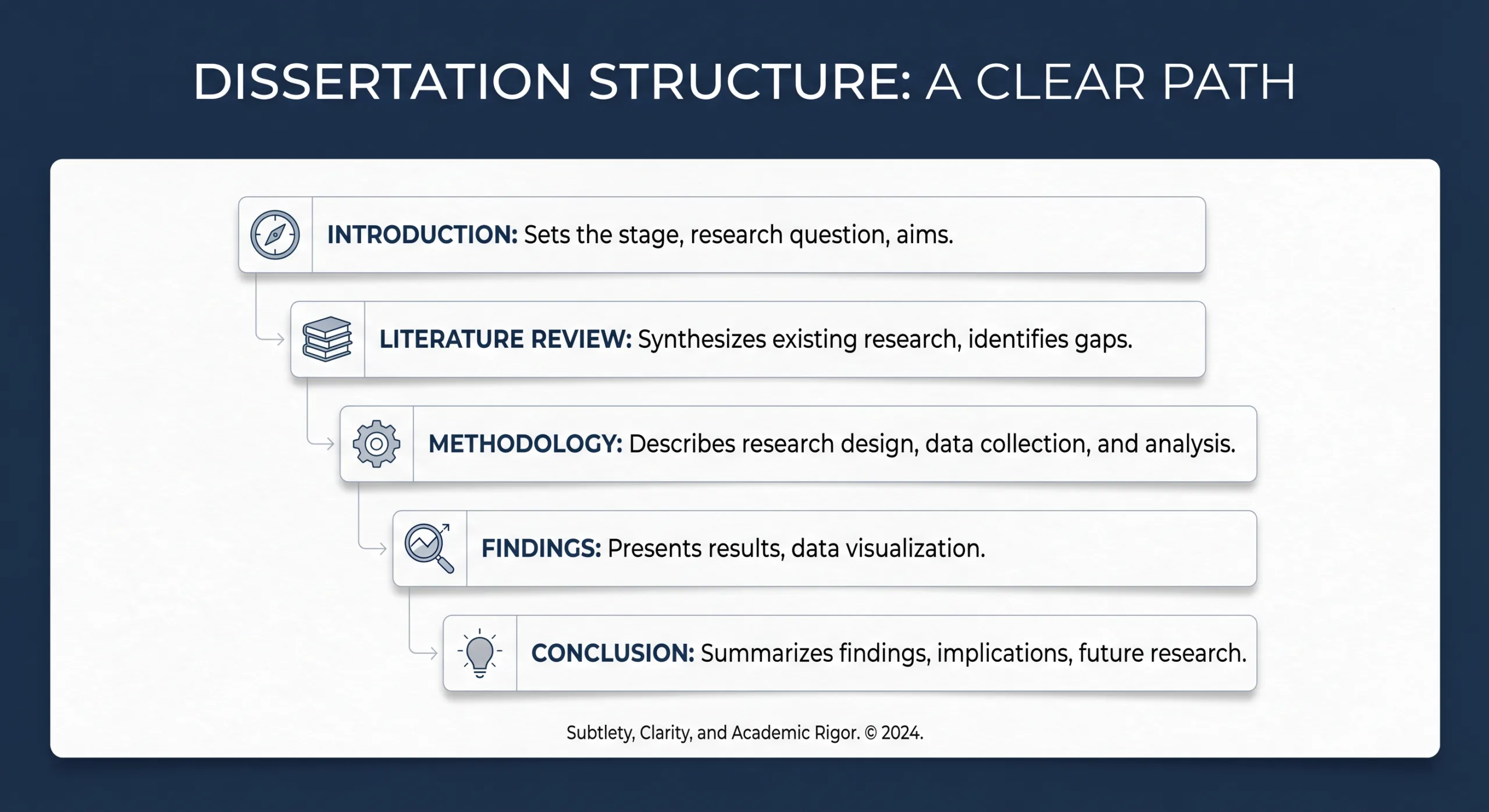
Before you start writing a dissertation, you need to know what you are building. A standard dissertation follows this structure:
- Introduction — background, research question, aims and objectives
- Literature Review — what existing research says about your topic
- Methodology — how you will collect and analyse your data
- Findings and Analysis — what your research revealed
- Conclusion — what it all means and what comes next
Each chapter has a defined job. Knowing this removes the panic of “what do I write next” at every stage. Think of it like constructing a building — you would not lay bricks before knowing the blueprint. Your dissertation structure is your blueprint.
If your methodology chapter is giving you trouble, our dissertation methodology guide covers the full process with examples.
Step 3: Do a Focused Literature Review, Not an Endless One
The literature review is where most students disappear for weeks. They keep reading, keep adding sources, and never start writing.
Set a hard limit. For a 10,000 to 12,000 word dissertation, 25 to 35 strong sources is enough. For a 15,000 to 20,000 word dissertation, aim for 40 to 60.
Once you hit your source limit, stop reading and start writing. Your literature review should:
- Identify key themes in existing research
- Show gaps your dissertation will address
- Position your research question within the academic conversation
A literature review is not a list of summaries. It is an argument about what the field knows and what it is missing. A useful way to structure it is to organise your sources by theme, not by author or date. This forces you to synthesise rather than summarise — which is exactly what examiners are looking for.
Step 4: Write Your Introduction Last, Not First
This surprises most students. The introduction is the hardest section to write at the start because you do not yet know exactly what your dissertation will say.
Write it last. Or write a rough draft introduction now and return to polish it once the rest of the dissertation is complete.
When you do write your introduction, it must cover:
- Background context for your topic
- Your research question and why it matters
- Your aims and objectives
- A brief overview of your dissertation structure
Knowing how to write a dissertation introduction properly saves you from rewriting it three times. Write it when you have the full picture — not before.
Step 5: Build a Writing Schedule That Is Actually Realistic
A dissertation does not get written in one sitting. It gets written in consistent, scheduled sessions over weeks and months.
Here is a simple structure that works:
- Write for 90 minutes per session, not hours at a stretch
- Target 300 to 500 words per session as a minimum
- Schedule three to four sessions per week
- Treat writing sessions like lectures — non-negotiable, in the calendar
Students who write every day, even badly, finish their dissertations. Students who wait for motivation do not. A practical tip — end every writing session mid-sentence. It sounds counterintuitive, but it gives your brain a natural entry point for the next session, removing the blank page problem entirely.
Avoiding common traps at this stage matters. Read about the most frequent common dissertation mistakes students make so you do not repeat them.
Step 6: Use Your Supervisor — Do Not Avoid Them
Many students treat their supervisor like an examiner — someone who will judge them. This is the wrong mindset entirely.
Your supervisor is your guide. Their job is to help you produce a better dissertation, not to fail you for having weak ideas.
Best practices for supervisor engagement:
- Send chapter drafts early, even if imperfect
- Ask specific questions, not vague ones like “is this okay?”
- Act on feedback before your next meeting, not after
- Keep a written log of every piece of advice you receive
For example, if your supervisor flags that your literature review lacks critical analysis, do not just add more sources — ask them specifically which section needs deeper engagement and why. That targeted response will serve you far better than a generic revision.
Understanding how to use supervisor feedback on dissertation drafts effectively can accelerate your progress significantly.
Step 7: Know When to Ask for Help
This is the step most students skip — and it costs them grades.
Asking for help is not a failure. It is a strategy. Students who seek structured support earlier tend to submit stronger dissertations and experience significantly less stress in the final weeks.
Signs you need support right now:
- You have been “planning to start writing a dissertation” for more than two weeks
- Your supervisor has flagged concerns about your direction
- You do not understand your methodology requirements
- Your deadline is within six weeks and you have less than 20% written
If any of these apply, do not wait longer. Support is available and the earlier you access it, the better your outcome will be.
What to Do in the Next 2 Hours to Start Writing a Dissertation
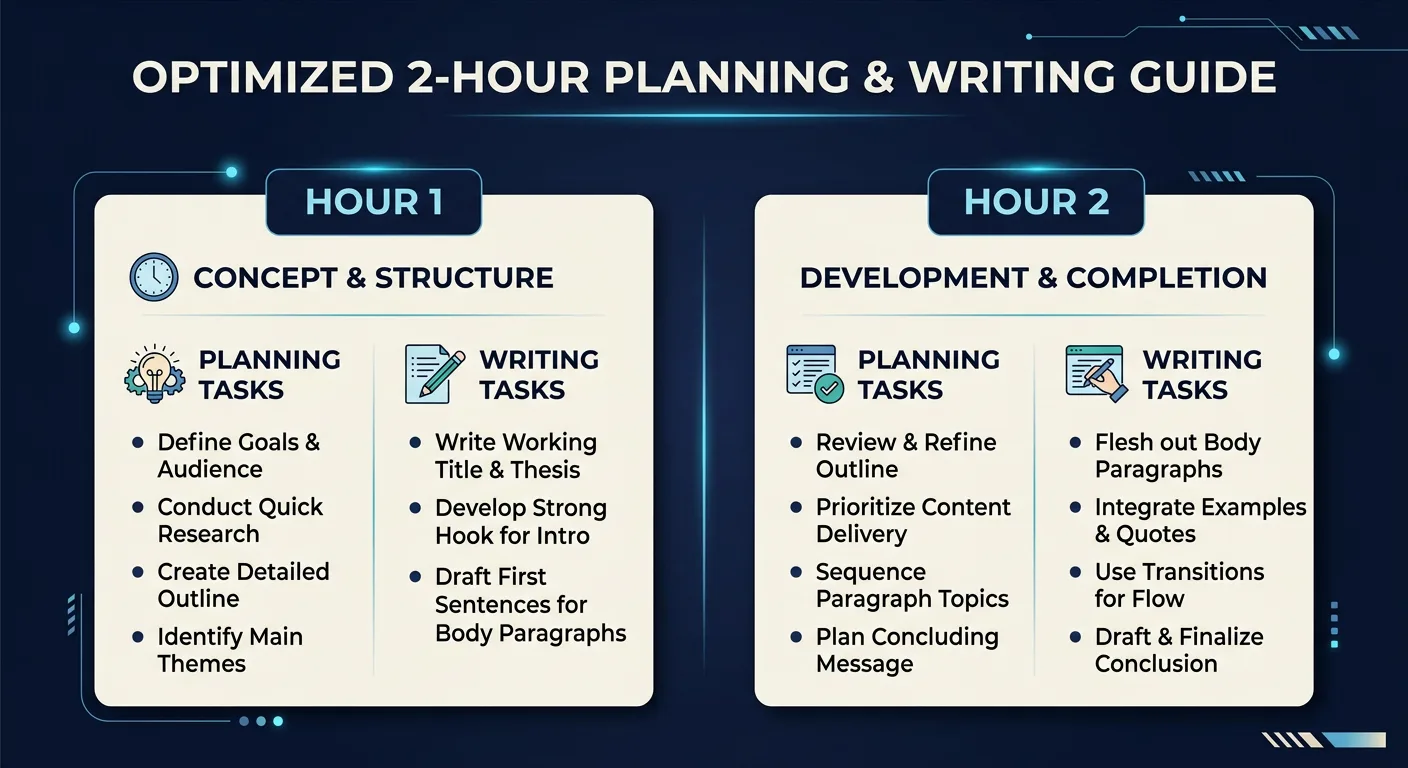
Reading a guide is not the same as making progress. This section converts everything above into immediate action. If you want to start writing a dissertation today — not tomorrow, not next week — this is exactly what to do.
Here is exactly what to do in the next 2 hours to start writing a dissertation today:
Hour 1 — Clarify and Structure (60 minutes)
- Write your research question in one sentence — no paragraphs, no bullet points, one sentence
- Open a blank document and create five headings: Introduction, Literature Review, Methodology, Findings, Conclusion
- Under each heading write 3 bullet points of what that chapter needs to cover based on your topic
- You now have a working skeleton — this is your dissertation outline
A practical tip here: do not open your email, your university portal, or any academic database during this hour. Distractions at this stage reset your momentum completely. Treat this hour like an exam — phone away, browser closed, full focus.
Hour 2 — Begin Writing (60 minutes)
- Pick the chapter you understand best — for most students this is the Literature Review or Methodology
- Set a timer for 45 minutes and write without stopping — do not edit, do not reread, just write
- At the end of 45 minutes you will have between 300 and 600 words of real dissertation content
- Spend the remaining 15 minutes reviewing what you wrote and noting what to expand next session
If you find yourself freezing during the writing timer, do not stop. Write what you know, write what you think, write questions you still need to answer — anything that keeps the document growing. You can delete bad writing. You cannot delete a blank page.
Two hours from now you will no longer be someone who has not started. That shift matters more than the word count. The hardest part of start writing a dissertation is the first move — and you will have already made it.
Common Dissertation Writing Mistakes to Avoid
Most dissertation errors are not academic — they are structural and behavioural. Students repeat the same mistakes across every university, every subject, every year. Knowing what they are before you start writing a dissertation is the difference between a first-class submission and a resubmission.
Here are the ones that cost grades the most:
Starting too late The most damaging mistake of all. A dissertation written under panic is a dissertation full of gaps. Start writing a dissertation the moment your topic is approved — not the week before submission. Even 200 words a day from the point of approval puts you in a significantly stronger position than most of your peers.
Treating the literature review as a reading exercise The literature review is a written argument, not a reading list. Students who spend eight weeks reading and two weeks writing produce weak literature reviews every time. A useful rule — for every hour you spend reading, spend 30 minutes writing notes in your own words. This forces synthesis from the start.
Ignoring dissertation structure Skipping chapters, merging sections, or writing without a clear structure produces a dissertation that confuses examiners. Follow the standard format unless your supervisor explicitly tells you otherwise. Structure is not a constraint — it is a framework that makes writing faster and easier.
Changing the research question mid-way This is a disaster. Changing your research question after the literature review is complete means rewriting everything. Lock it in early and commit. If you feel the urge to change it, speak to your supervisor first — they will tell you whether it is a genuine improvement or a panic response.
Avoiding supervisor contact Students who disappear between supervision sessions always struggle more in the final weeks. Your supervisor cannot help you if they do not know where you are. Even a brief email update between sessions keeps the relationship active and signals that you are engaged with the process.
Not proofreading before submission Spelling errors, inconsistent referencing, and formatting mistakes are entirely avoidable. They also signal carelessness to examiners. Build at least three days of proofreading time into your schedule before the submission deadline — not the night before.
Underestimating the methodology chapter This is the chapter most students underwrite. If your methodology is weak, your findings have no credibility. Many students do not realise how technically demanding this chapter is until they are already writing it. If your methodology has already been flagged as a problem, read about what happens when your dissertation methodology rejected and how to recover from it quickly.
Dissertation Mini Template
This is a bare-bones framework you can copy, paste, and fill in for your own dissertation. It will not write your dissertation for you — but it will stop you from staring at a blank page.
Title Page [Your Full Name] [University Name] [Course / Programme Title] [Dissertation Title] [Submission Date]
Abstract (200 to 300 words) This dissertation investigates [your topic] with a focus on [specific angle]. The study aims to [primary aim]. Using [methodology], this research analyses [what you are examining]. Key findings suggest [brief summary of what you expect to find]. The study contributes to [field/subject area] by [what gap it addresses].
Chapter 1: Introduction
- Background to the topic (3 to 4 paragraphs)
- Research question: [write it here in one sentence]
- Aims and objectives (3 to 5 bullet points)
- Significance of the study
- Overview of dissertation structure
Chapter 2: Literature Review
- Theme 1: [key academic debate or concept]
- Theme 2: [second major area of existing research]
- Theme 3: [gap in literature your study addresses]
- Linking paragraph: how existing research leads to your research question
Chapter 3: Methodology
- Research philosophy: [positivism / interpretivism / pragmatism]
- Research approach: [qualitative / quantitative / mixed methods]
- Data collection method: [surveys / interviews / secondary data]
- Sampling strategy: [who, how many, why]
- Ethical considerations
- Limitations of the methodology
Chapter 4: Findings and Analysis
- Present data clearly — tables, charts, or thematic analysis
- Link every finding back to your research question
- Do not interpret here — save that for the discussion section
Chapter 5: Conclusion
- Restate your research question
- Summarise key findings
- Answer the research question directly
- Limitations of your study
- Recommendations for future research
References [Follow your university’s required referencing style — Harvard, APA, Vancouver, or OSCOLA]
This template works for undergraduate and postgraduate dissertations across most UK, Australian, and Canadian universities. If you are writing an MBA dissertation, the structure varies slightly — see our MBA dissertation help guide for a subject-specific breakdown.
When to Seek Dissertation Help
There is a difference between a student who is finding their dissertation challenging and a student who is genuinely stuck. The first is normal. The second is a signal to act.
Most students wait too long to ask for help. By the time they do, deadlines are close, stress is high, and the margin for recovery is thin.
Here are the signs that you need structured dissertation support — not tomorrow, now:
Your deadline is within 8 weeks and you have not started This is not a motivation problem. This is a time problem. At this point, every day without a plan is a day lost permanently. The longer you delay, the narrower your options become.
Your supervisor has raised serious concerns If your supervisor has flagged issues with your research question, methodology, or literature review, those concerns will not resolve themselves. They need direct attention — and they need it now, not in your next scheduled session.
You do not understand the methodology requirements Methodology is the most technically demanding chapter of any dissertation. If you are unclear on research philosophy, data collection, or analysis methods, your findings chapter will suffer as a result. This is not a gap you can paper over with extra writing.
You have failed or been asked to resubmit A resubmission is not the end — but it requires a structured approach, not a repeat of the same process that led to the first outcome. Getting targeted support at this stage can be the difference between passing and failing outright.
You are managing work, family, or health alongside your studies Life does not pause for dissertations. If external pressure is affecting your ability to focus, that is a legitimate reason to seek support — not a weakness. Many students across the UK, Australia, and Canada manage full-time responsibilities alongside postgraduate study. You are not alone in finding it difficult.
The University of Hertfordshire’s dissertation support resources outline the kind of structured academic guidance that makes a measurable difference for students who are struggling to stay on track.
Knowing when to ask for help is not a sign of failure. It is the decision that separates students who submit on time from those who do not.
Still stuck even after trying these steps? Get instant dissertation help on WhatsApp and speak directly with an expert. Message us now
Frequently Asked Questions
Do students have to write a dissertation?
Not always. Whether a dissertation is compulsory depends on your university, your course, and your level of study. Most undergraduate honours degrees and postgraduate taught programmes in the UK, Australia, and Canada require students to start writing a dissertation or equivalent research project as part of their final assessment. Some universities offer an alternative such as a research report or extended essay. Check your programme handbook or speak to your academic advisor to confirm what applies to you.
What is the difference between a dissertation and a thesis?
In the UK and Australia, a dissertation is typically submitted as part of an undergraduate or taught postgraduate degree, while a thesis refers to original research submitted for a research degree such as an MPhil or PhD. In the US and Canada, the terms are sometimes used the other way around. The core difference is scope — a thesis involves a larger, more original contribution to knowledge. Understanding this distinction matters before you start writing a dissertation, as the expectations and structure differ significantly between the two.
How long does it take to write a dissertation?
For a standard 10,000 to 12,000 word undergraduate dissertation, most students need between 8 and 12 weeks of consistent work. A postgraduate dissertation of 15,000 to 20,000 words typically requires 12 to 20 weeks. These timelines assume you start writing a dissertation early, maintain regular writing sessions, engage your supervisor consistently, and lock in your research question from day one. Students who begin earlier consistently finish with stronger submissions and significantly lower stress levels.
How do I write a dissertation introduction?
Your introduction should open with background context on your topic, present your research question clearly, state your aims and objectives, explain why the study matters, and close with a brief outline of your dissertation structure. When you start writing a dissertation introduction, write it last or write a rough version now and return to polish it once the rest is complete. Many students find this approach removes significant pressure from the early stages.
What is the 3 paper rule in a dissertation?
The 3 paper rule, also called a paper-based or publication-based dissertation, is an alternative format used at some universities — particularly at postgraduate and doctoral level. Instead of one continuous piece of writing, the dissertation consists of three publishable research papers unified by an overarching introduction and conclusion. Not all universities accept this format, so confirm with your supervisor before you start writing a dissertation in this structure.
Is 80% a good mark for a dissertation?
Yes. In the UK grading system, 80% falls within the first-class honours band, which is the highest classification available. Achieving 80% or above is considered an excellent result by any standard. Most students who receive first-class marks combine a strong research question, rigorous methodology, and clear academic writing — all of which become significantly easier to achieve when you start writing a dissertation early and follow a structured process.
How do I begin the first chapter of my dissertation?
The first chapter is your introduction. Begin by setting the context for your research — explain the background to your topic in broad terms, then narrow it down to the specific gap your dissertation addresses. From there, state your research question, your aims, and your objectives. Many students find it easier to write a placeholder introduction first when they start writing a dissertation and return to refine it once the other chapters are complete.
Where can I find dissertation examples?
Your university library is the best starting point. Most university libraries hold past dissertations in physical or digital form. You can also access dissertation databases such as EThOS in the UK or ProQuest in North America. University of Greenwich postgraduate resources provide guidance on academic research and dissertation expectations for postgraduate students across a range of subject areas.
Conclusion
Starting a dissertation is not about finding the perfect moment. It is about building the right structure and taking the first step — even an imperfect one.
This guide has walked you through every stage of how to start writing a dissertation — from understanding why students get stuck, to a 7-step system you can act on today, to a mini template you can open right now and begin filling in.
The students who struggle most are not the least capable. They are the ones who wait for clarity before they start, when clarity only comes from starting. Every expert dissertation writer was once a student staring at a blank page — the difference is they started anyway.
Here is what to do right now:
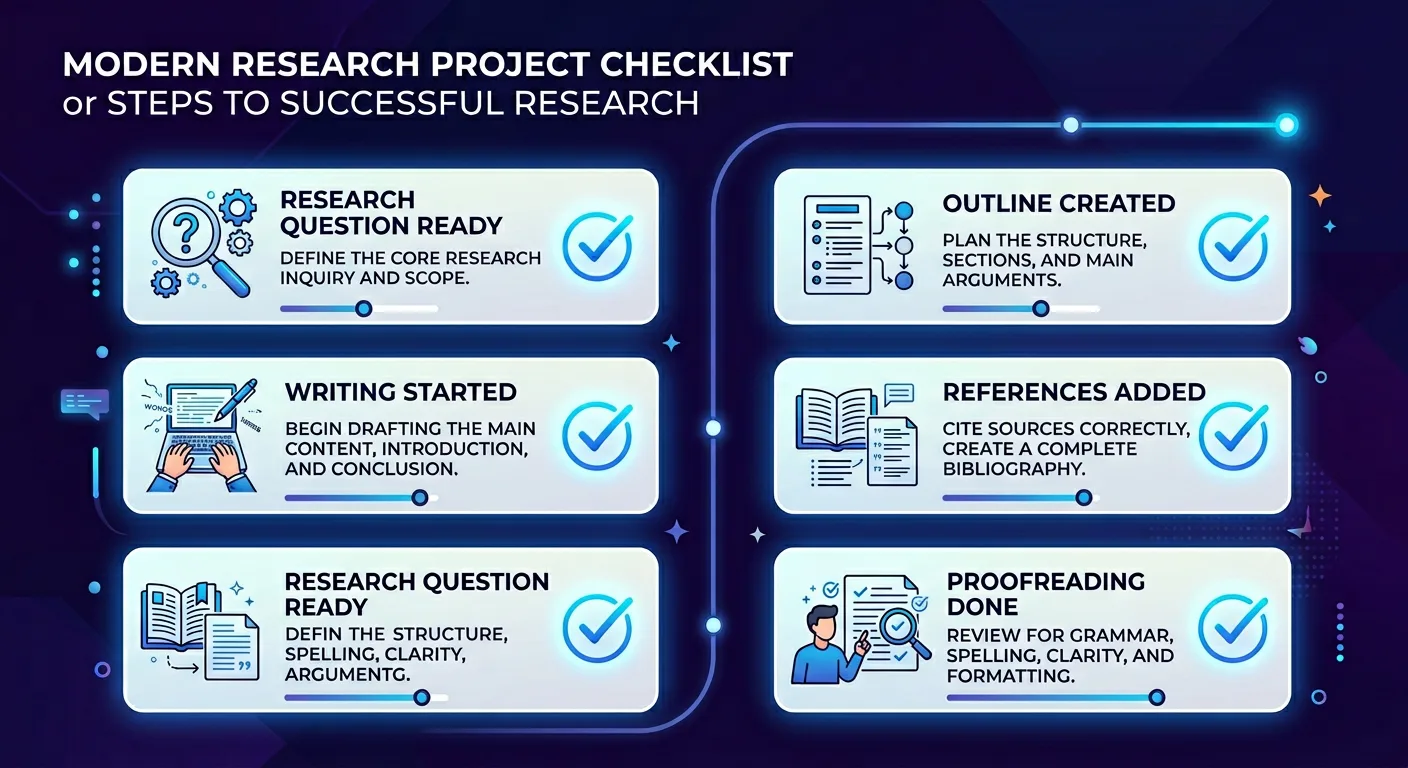
- Write your research question in one sentence
- Open a blank document and create your five chapter headings
- Set a timer for 45 minutes and write your first 300 words
That is how to begin writing a dissertation. Not with a perfect plan — with a first move. The structure follows the start, not the other way around.
If at any point the process feels beyond what you can manage alone — whether because of time pressure, a difficult methodology, or feedback you do not know how to act on — support is available.
AssignProSolution works with dissertation students across the UK, Australia, Canada, Ireland, and the UAE. Our experts provide structured guidance at every stage of the dissertation writing process — from research question to final submission. If you are struggling to start writing a dissertation or feeling overwhelmed with structure or deadlines, our experts can guide you step by step.
You are not expected to figure this out alone. You are expected to submit on time, with work you are proud of.
Get in touch today or message us directly on WhatsApp — no forms, no waiting, just expert support when you need it most.
Related reading you may find useful: