
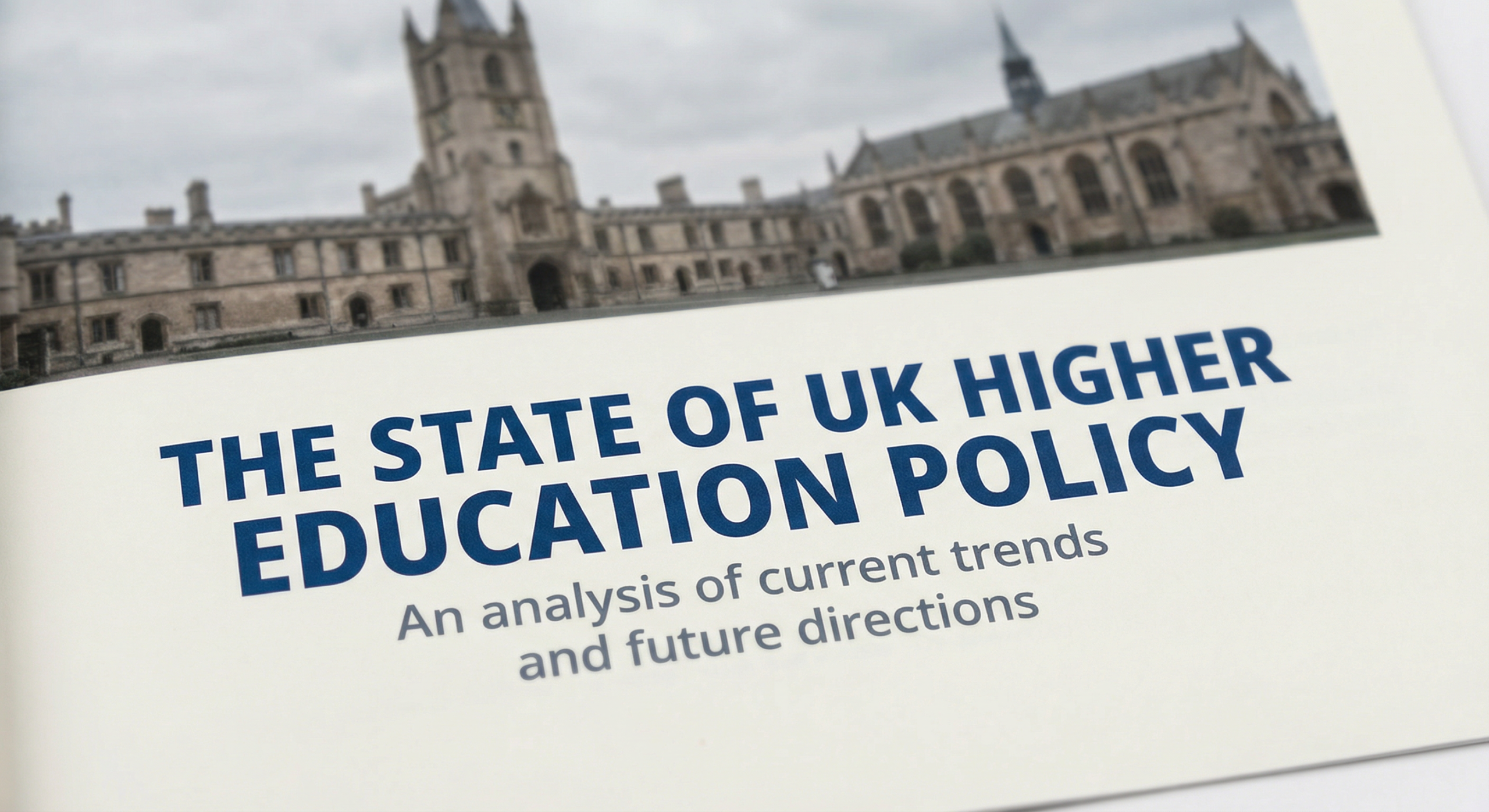
Why UK Universities Were Forced to Respond to the Financial Crisis by 2026
The pressures that forced UK universities into decisive action by 2026 did not appear overnight. They developed gradually through years of funding shortfalls, rising costs, and increasing reliance on international tuition revenue. These underlying forces—particularly shrinking public funding and falling international student numbers—are examined in detail in UK Universities Financial Crisis 2026: How Funding Shortfalls and Falling International Student Numbers Are Converging, which explains how financial strain shifted from manageable to structural across the sector.
By 2026, the UK universities response to financial crisis became unavoidable. Domestic tuition fees remained capped, government funding failed to keep pace with inflation, and universities lost the flexibility they once used to absorb pressure internally. What had been delayed for years could no longer be postponed without threatening institutional stability.
A Funding Model That Reached Its Limit
For more than a decade, UK universities operated within a constrained funding model. While income growth was restricted, baseline costs continued to rise. Staff salaries, pension contributions, energy prices, and campus maintenance expenses increased year after year, steadily narrowing operating margins.
Initially, universities managed these pressures through internal adjustments. Budget gaps were addressed through efficiency drives, delayed hiring, and selective reductions. This approach allowed institutions to function without visible disruption, but it did not correct the imbalance between income and expenditure.
By the mid-2020s, this model stopped working. Financial pressure became permanent rather than cyclical, leaving universities with no room to absorb losses without affecting teaching, staffing, or student services. This pattern reflects the broader UK universities response to financial crisis, rather than isolated or short-term reform.
International Tuition as a Dependency Rather Than Protection
International student fees played a critical role in delaying this reckoning. Growth in overseas enrolment allowed universities to subsidize shortfalls and maintain operations without structural reform. While effective in the short term, this strategy increased dependence on a single revenue stream.
As international student enrolment in the UK slowed due to visa policy changes, rising living costs, and stronger competition from other destinations, this dependence became a vulnerability. Revenue softened precisely as operating costs accelerated, exposing how fragile the system had become.
Inflation and Costs Universities Could Not Avoid
Inflation intensified pressure across the sector. Universities faced higher wage demands, increased pension liabilities, and sharply rising energy and infrastructure costs. These were not discretionary expenses that could be delayed or quietly reduced.
Unlike previous periods of constraint, institutions could no longer rely on gradual adjustment. The speed and scale of cost increases forced immediate decisions, reducing the scope for cautious reform.
Why Incremental Reform Was No Longer Enough
Before 2026, many universities attempted to manage pressure through incremental measures—temporary hiring freezes, small efficiency initiatives, and selective service reductions. These actions bought time but delivered diminishing returns.
By 2026, it was clear that marginal adjustments could no longer stabilize finances. The scale of the problem required structural responses rather than short-term fixes, pushing universities toward more decisive and visible change.
From Strategic Planning to Survival Decisions
This context explains why UK higher education strategy in 2026 appears reactive rather than visionary. Universities are not redesigning education around long-term improvement; they are restructuring to remain operational under sustained financial constraint.
Understanding this shift is essential. It explains why later responses—such as AI adoption, admissions reform, and changes in international recruitment—are driven by necessity rather than innovation. These are not optional upgrades. They are survival decisions shaping the future of UK universities.
The Rise of AI and Automation in UK Universities
AI adoption across UK universities is often presented as innovation, but in 2026 its primary driver is financial pressure rather than educational reform. As part of the broader UK universities response to financial crisis, institutions are turning to automation to manage rising costs, staff shortages, and growing student cohorts without expanding payroll. This marks a significant shift in how higher education is delivered and experienced.
AI Adoption as a Cost-Containment Strategy
The expansion of AI in UK higher education is closely tied to efficiency. Universities are using automated systems to handle tasks that were previously labor-intensive, including assessment processing, feedback generation, attendance tracking, and administrative queries. From an institutional perspective, this improves scalability and predictability at a time when resources are constrained.
However, while UK universities’ AI adoption improves speed and consistency, it does not automatically enhance learning quality. Feedback may arrive faster, but it is often more standardized. Academic judgement is increasingly shaped by predefined frameworks rather than individual engagement, particularly in high-enrolment programs.
Where Automation Is Replacing Human Interaction
Beyond assessment, automation is reshaping everyday academic interaction. Digital platforms now manage functions once handled by staff, such as progress monitoring, scheduling, and routine student support. These systems reduce administrative burden but also reduce informal contact between students and academics.
For students, the change is gradual rather than dramatic. There is no single point where support disappears. Instead, access to staff becomes more limited, responses become more system-driven, and interaction shifts from conversation to process. This change disproportionately affects students who rely on guidance, clarification, or personalized feedback.
Uneven Impact Across Courses and Disciplines
AI adoption is not uniform across UK universities. High-volume, coursework-heavy programs are most exposed to automation because they offer the greatest efficiency gains. Smaller, research-intensive, or specialist courses retain more traditional teaching models, at least for now.
This uneven implementation creates varied academic experiences within the same institution. Some students encounter highly standardized systems, while others continue to receive more personalized support. Understanding this divide is important for students assessing what studying in the UK in 2026 will actually involve. AI adoption should be understood as part of the wider UK universities response to financial crisis, focused on scale and cost control.
What AI Adoption Signals About the Future of UK Universities
The rise of AI and automation reflects a broader shift in institutional priorities. Universities are optimizing for scale, consistency, and cost control rather than flexibility or individualization. This does not mean education quality is collapsing, but it does mean expectations must change.
AI in UK higher education is less about transforming how students learn and more about sustaining systems under pressure. Recognizing this helps explain why later reforms—particularly in admissions and international recruitment—are focused on predictability and risk management rather than experimentation. Together, these changes offer a clearer picture of the future of UK universities as they adapt to prolonged financial constraint.
Admissions Reforms as a Financial Strategy

By 2026, admissions policies across UK universities are no longer shaped primarily by academic philosophy or access goals. They have become an operational tool within the broader UK universities response to financial crisis. Faced with sustained financial pressure, limited staffing capacity, and reduced tolerance for volatility, institutions are using admissions reform to control risk and stabilize outcomes rather than to expand opportunity.
This shift is not always stated explicitly. Universities continue to frame changes in terms of standards, quality, and preparedness. However, the underlying driver is financial constraint. When margins are thin and systems are overstretched, predictability becomes more valuable than growth. Admissions is one of the few levers universities can still adjust quickly and at scale.
Admissions as Risk Filtering Rather Than Access Expansion
UK university admissions reforms in 2026 increasingly priorities applicants who present fewer academic and financial uncertainties. Students with strong prior attainment, secure funding, and a lower likelihood of interruption are favored because they are easier to support within constrained systems and more likely to progress smoothly.
This represents a quiet but significant change. In earlier years, universities often used admissions flexibility to fill places and maximize enrolment. Under financial pressure, that logic has reversed. Institutions are now more cautious about whom they admit, even if it means leaving capacity unused, because volatility carries cost.
Contextual offers and discretionary decisions still exist, but they play a smaller role than before. Where universities once absorbed risk in the name of access or widening participation, they are now less willing to do so when resources are limited.
Why Entry Requirements Are Tightening Across Programs
Rising operational costs have made underperformance expensive. Students who struggle academically, require extensive support, or withdraw mid-course create financial strain through lost tuition revenue, additional support demands, and administrative burden. In a system already under pressure, these outcomes are harder to absorb.
As a result, universities are tightening entry requirements, narrowing pathways, and using conditional offers more strategically. The goal is not simply to raise standards, but to shape cohorts that are more predictable in size, performance, and progression.
This trend is particularly visible in large, high-enrolment programs where small changes in retention or performance can have significant financial impact. Admissions criteria are being used to reduce variability, even if that reduces flexibility for applicants.
Uneven Impact Across Institutions and Disciplines
Admissions reforms are not applied uniformly across the sector. High-demand courses with strong revenue potential can afford to be selective and may even raise thresholds further. Programs with weaker demand or higher delivery costs face consolidation, restructuring, or closure, reducing options for applicants whose profiles fall outside preferred risk categories.
Institutional context also matters. Universities with tighter budgets or greater exposure to international enrolment fluctuations tend to adopt more conservative admissions strategies. In these settings, caution replaces expansion as the dominant logic. Admissions tightening has become a defining feature of the UK universities response to financial crisis in 2026.
For applicants, this creates a more uneven landscape. The same academic profile may receive different outcomes depending on an institution’s financial position rather than purely academic considerations.
What Admissions Reform Means for Students in 2026
For students planning to study in the UK in 2026, admissions reform changes the nature of competition. Offers are more conditional, entry thresholds are less flexible, and tolerance for uncertainty is lower. Borderline candidates face higher rejection rates, not necessarily because standards have risen, but because institutions are less willing to manage risk.
Understanding why UK universities are changing admissions helps students interpret these outcomes more accurately. Rejections and tighter conditions are often structural rather than personal. They reflect a system under pressure, optimizing for stability rather than opportunity.
Admissions reform, then, is not a neutral adjustment. It is a financial strategy that reshapes who gains access to UK higher education and under what conditions. Recognizing this reality is essential for students navigating an increasingly constrained and selective system.
The Strategic Pivot Toward India in International Recruitment
As international enrolment patterns shift, UK universities are no longer pursuing broad-based global recruitment. By 2026, many institutions have narrowed their focus, concentrating resources on markets that offer scale and relative predictability. Within this context, India has emerged as the most strategically important source of international students, shaping the UK universities international recruitment strategy under sustained financial pressure.
This pivot is not driven by preference or diversification goals. It is a response to declining international student enrolment across other regions and the need to stabilize revenue quickly. For universities operating under constraint, India represents one of the few markets where demand remains strong enough to offset losses elsewhere.
Why India Has Become Central to Recruitment Strategy
Recruitment from several traditional markets has slowed in recent years. Visa restrictions, rising living costs, and stronger post-study pathways in competing destinations have reduced demand from parts of East Asia, Africa, and Europe. In contrast, interest from Indian applicants has remained comparatively resilient.
India offers scale at a moment when scale matters. The size of the applicant pool, continued demand for UK qualifications, and strong postgraduate interest make India a viable stabilizing force for enrolment. For institutions managing financial pressure, this combination is difficult to ignore.
How Universities Are Reallocating Resources Toward India
The pivot toward India is visible in operational decisions. Recruitment teams are increasingly concentrated in Indian cities. Partnerships with local institutions and agents are expanding. Course portfolios, particularly at postgraduate level, are being adjusted to align with demand from Indian students.
These shifts are not marginal. They represent structural choices tied directly to revenue planning. In the context of the UK universities response to financial crisis, recruitment strategy is no longer about balance or global reach—it is about securing dependable enrolment at scale.
Concentration as a Short-Term Solution
Focusing recruitment on a single market helps address immediate financial pressure, but it also introduces new risks. Dependence on India increases exposure to policy changes, economic shifts, and fluctuations in demand beyond university control. What stabilizes enrolment in the short term may increase vulnerability over time.
This concentration also affects campus composition. As intake becomes more geographically concentrated, regional diversity declines. Academic and cultural experiences shift, altering the character of international education in the UK.
What the India Pivot Means for Students
For Indian students studying in the UK, increased focus brings both opportunity and pressure. Application volumes are higher, competition is more intense, and cohort sizes are larger. Support systems, already under strain, must stretch further to accommodate concentrated intake.
For other international students, reduced recruitment focus may mean fewer places, less tailored support, and limited program availability. These outcomes reflect a system prioritizing efficiency and predictability over breadth.
The pivot toward India illustrates a broader reality about the future of UK universities. International recruitment is no longer guided by long-term diversification strategies. It is shaped by immediate financial necessity, reinforcing how institutional priorities have shifted under sustained constraint.
What These Institutional Changes Mean for Students
For students, the impact of institutional reform is rarely communicated clearly or experienced all at once. Instead, it appears gradually, embedded in everyday academic life. A course structure feels more rigid than expected. Feedback arrives on time but lacks depth. Access to academic staff exists in policy documents but proves difficult in practice. Individually, these shifts seem manageable. Collectively, they signal a system that has reoriented its priorities under sustained financial pressure.
UK universities responding to constraint are increasingly optimizing for scale, predictability, and operational consistency. Teaching models are designed to function efficiently across large cohorts with limited staffing. Processes are standardized to reduce variation, minimize risk, and control workload. From an institutional perspective, this stabilizes delivery. From a student perspective, it reduces flexibility and narrows the space for personalized academic engagement.
How Teaching Models Are Being Reshaped
One of the most significant changes students encounter is the standardization of teaching delivery. Large cohorts, combined with tighter staffing levels, make labor-intensive models difficult to sustain. As a result, lectures, seminars, and assessments are increasingly structured around formats that can be delivered consistently at scale.
This often means fewer opportunities for extended discussion, individual clarification, or adaptive teaching. Learning materials are more uniform, assessment criteria more tightly defined, and teaching interactions more procedural. While this approach ensures continuity, it also limits responsiveness to individual learning needs.
For students who thrive in structured environments, this model can work effectively. For those who rely on discussion, iteration, or close academic guidance, it can feel restrictive and impersonal.
Assessment, Feedback, and the Loss of Academic Dialogue
Assessment and feedback practices reflect the same shift toward efficiency. Automated or template-based feedback systems allow universities to manage high volumes of work within constrained timelines. Turnaround times may improve, but the depth of feedback often decreases.
Rather than engaging in academic dialogue, students are expected to interpret generalized comments independently and apply them across future work. Opportunities for clarification exist, but access is limited and often delayed. Over time, this reduces the role of feedback as a learning tool and reframes it as a compliance checkpoint.
This change disproportionately affects students unfamiliar with UK academic conventions, who often depend more heavily on detailed explanation and iterative feedback.
Reduced Support and the Redistribution of Responsibility
As institutional capacity tightens, responsibility for academic progress shifts increasingly toward students. Tasks that were once supported through informal guidance—time management, expectation-setting, and interpretation of requirements—are now framed as individual responsibilities.
Support structures still exist, but they are less accessible and more procedural. Students are expected to navigate systems independently, seek help within limited windows, and adapt quickly when responses are delayed. When difficulties arise, universities are more likely to reference policy and process than intervene proactively.
This redistribution of responsibility reflects financial constraint rather than neglect. However, its effects are uneven. Students with strong self-management skills adjust more easily. Others struggle quietly, particularly when support systems are overstretched.
Why Fit Matters More Than Reputation
In this environment, institutional fit matters more than ranking or brand recognition. A highly ranked university operating at scale may offer fewer opportunities for personalized engagement than a lower-ranked institution with smaller cohorts and more stable staffing.
Reputation no longer guarantees a particular academic experience. What matters instead are practical factors: cohort size, staff-to-student ratios, assessment design, and responsiveness. The future of UK universities does not produce a uniform student experience; it produces uneven ones shaped by institutional capacity and financial position.
Understanding this shift helps explain why students at different universities—or even within the same institution—report markedly different experiences.
Interpreting the Student Experience in 2026
Studying in the UK in 2026 requires recalibrated expectations. Universities are not withdrawing support because they no longer value student experience. They are reallocating limited resources in response to sustained financial pressure.
Students who interpret this environment accurately are better positioned to adapt. Those who rely on assumptions shaped by past models of UK higher education often experience frustration, confusion, or disengagement. Recognizing that these conditions are structural rather than personal allows students to respond strategically rather than react emotionally.
Understanding how institutional changes translate into daily academic life is essential. It explains why pressure feels higher, flexibility feels reduced, and responsibility feels heavier—even when universities continue to present continuity on the surface.
How Students Should Interpret These Changes

One of the biggest mistakes students make when assessing UK universities in 2026 is taking institutional reforms at face value. Language around modernization, innovation, and transformation often implies improvement. In practice, many of these changes are responses to constraint rather than genuine upgrades to the student experience. Interpreting reforms accurately requires reading beyond official messaging and understanding what sustained financial pressure forces institutions to priorities.
UK universities are not deliberately misrepresenting conditions. They are reframing necessity in neutral or positive terms. Efficiency is presented as innovation. Standardization is framed as consistency. Automation is described as enhancement. For students, the challenge is not to reject these changes outright, but to understand how they translate into everyday academic life.
Why Efficiency Does Not Always Mean Improvement
Faster systems are not inherently better systems. Automated processes can reduce delays while also reducing depth. Digital platforms can streamline delivery while limiting meaningful interaction. When universities emphasizes efficiency, students should assume that trade-offs exist, even if those trade-offs are not stated explicitly.
Quicker feedback, for example, may come at the expense of individualised guidance. Standardised assessments may reduce ambiguity while narrowing opportunities for creative or exploratory work. These outcomes are not failures of implementation; they are consequences of design choices made under financial pressure.
Recognising this distinction helps students avoid misplaced expectations and frustration when promised improvements feel superficial.
Reading Signals Instead of Marketing Language
Students planning to study in the UK in 2026 need to learn to read signals rather than slogans. Marketing materials emphazise rankings, facilities, and outcomes, but they reveal little about how learning is actually delivered on a day-to-day basis.
More reliable indicators include staff-to-student ratios, cohort sizes, assessment structure, and response times. These details offer clearer insight into how much personal engagement a university can realistically provide. When these indicators suggest scale and standardization, students should expect limited flexibility regardless of how the institution presents itself.
Understanding why UK universities are changing admissions, adopting AI, and concentrating recruitment helps students interpret these signals more accurately.
Why Responsibility Is Shifting Toward Students
As institutional capacity tightens, universities increasingly assume that students will self-manage. Tracking deadlines, interpreting feedback, and seeking support within limited windows are framed as personal responsibilities rather than shared processes.
This shift is not accidental. It reflects a system designed to function with fewer staff and greater predictability. For some students, this environment is manageable. For others—particularly those who rely on dialogue, reassurance, or iterative feedback—it increases academic and psychological strain.
As institutional support becomes thinner and academic systems more standardized, some students quietly turn to external academic assistance to manage workload and expectations. Using platforms such as AssignproSolution has become a practical option for students navigating large cohorts, automated feedback, and limited access to personalized academic guidance.
Adapting Expectations Without Disengaging
Understanding institutional constraints does not mean disengaging from the academic experience. It means adjusting expectations to match reality. Students who recognize that universities are operating under pressure are better positioned to make strategic decisions about workload, communication, and support.
Those who assume institutions will compensate for systemic strain often feel misled or unsupported. Those who understand the system’s limits are more likely to navigate it successfully. The difference lies not in ability, but in interpretation. Overall, the UK universities response to financial crisis signals a system prioritizing stability over expansion.
Judgement, Not Optimism, Defines Success in 2026
Choosing to study in the UK in 2026 requires judgement rather than optimism. Universities still offer valuable qualifications, but the experience surrounding those credentials is more standardized, less forgiving, and more dependent on self-management than in the past.
Students who interpret reforms accurately—recognizing what universities can provide and what they cannot—are better equipped to adapt. Those who rely on outdated expectations risk misunderstanding the environment they are entering. Interpreting change correctly does not diminish opportunity; it clarifies it.
Conclusion: What the UK Universities’ Response to the Financial Crisis Really Means
The way UK universities are responding to the financial crisis by 2026 reveals a sector operating under constraint rather than renewal. AI adoption, admissions reform, and concentrated international recruitment are not signs of strategic confidence or long-term transformation. They are practical responses to sustained financial pressure, staffing limitations, and reduced tolerance for uncertainty.
These changes do not render UK higher education irrelevant or unviable. However, they do alter how value is delivered. Universities are optimizing for continuity, efficiency, and predictability rather than flexibility or personalization. As a result, responsibility is shifting. Institutions are no longer positioned to absorb pressure on behalf of students; students are increasingly expected to adapt to institutional limits.
For those studying in the UK in 2026, this shift matters more than rankings or marketing narratives. The academic experience is becoming more standardized, support structures thinner, and engagement more system-driven. Success depends less on institutional prestige and more on alignment—between student expectations, learning style, and the realities of how universities now operate.
Understanding the UK universities response to financial crisis allows students to interpret these changes accurately. Universities are not withdrawing support out of indifference. They are reallocating limited resources in response to structural pressure. Misreading this environment leads to frustration and disengagement. Reading it clearly enables preparation and strategic adjustment.
The future of UK universities will not be defined by a single reform or innovation. It will be shaped by how institutions manage constraint and how students respond to it. Those who approach UK higher education with realistic expectations, informed judgement, and a willingness to self-manage can still extract significant value. Those who rely on outdated assumptions about institutional support may find the system less forgiving than anticipated.
In 2026, UK higher education is no longer a system built to adapt to every student. It is a system asking students to adapt to it. Recognizing that reality is not pessimism—it is the starting point for making informed decisions in a changed academic landscape.
Why are UK universities responding so strongly to the financial crisis by 2026?
UK universities are responding strongly because long-term financial pressure has reached a point where incremental cost-cutting no longer works. Capped domestic tuition fees, rising operational costs, and declining international student enrolment have reduced institutional flexibility, forcing universities to make structural changes to remain financially viable.
How does AI adoption fit into the UK universities response to financial crisis?
AI adoption in UK universities is primarily a cost-control and scalability measure. Automation allows institutions to manage large student cohorts, assessment workloads, and administrative processes with fewer staff. While this improves efficiency, it often leads to more standardized teaching and reduced personalized academic interaction.
Why are UK universities changing admissions policies in 2026?
UK university admissions reforms in 2026 are driven by financial risk management. Universities are prioritizing applicants who are academically and financially predictable to reduce enrolment volatility, limit withdrawals, and manage support costs under sustained financial pressure.
Why are UK universities focusing more on Indian students?
India has become central to the UK universities international recruitment strategy because it offers scale at a time when enrolment from other regions is slowing. Demand from Indian students remains relatively strong, making India a key market for stabilizing international student numbers and revenue.
How do these changes affect international students in the UK in 2026?
International students may experience larger class sizes, increased automation, reduced access to academic staff, and greater responsibility for self-management. The overall experience is more standardized and less flexible than in previous years, reflecting institutional efforts to operate efficiently under constraint.
Do AI adoption and admissions reforms improve education quality?
These reforms improve institutional efficiency and financial stability, but they do not automatically improve education quality. In many cases, they reduce opportunities for personalized feedback, mentoring, and academic dialogue, particularly in high-enrolment programs.
Is the UK still a good option for international students in 2026?
Yes, but only for students who plan strategically. Studying in the UK in 2026 requires understanding institutional constraints, choosing stable universities, and adjusting expectations to a system that prioritizes efficiency and predictability over individual support.
How should students prepare to study in the UK under these conditions?
Students should research institutional stability, understand teaching and assessment models, plan finances carefully, and be prepared for limited institutional support. Independent planning, realistic expectations, and strong self-management skills are increasingly important.