
Common Dissertation Mistakes That Cause Students to Fail
Imagine spending six months researching, writing, and revising your dissertation — only to open your results and see a failing grade. It happens more than you think.
Studies show that nearly 19.5% of university students in the UK fail their dissertation — not because they lacked intelligence, but because they fell into the same traps that hundreds of students before them did. Small, avoidable common dissertation mistakes that snowball into serious academic consequences.
From choosing the wrong research topic to ignoring referencing guidelines, these dissertation mistakes are rarely taught in classrooms — which is exactly why so many students get blindsided.
Whether you are an undergraduate writing your first major paper or a postgraduate chasing distinction, this guide is for you.
Here, we cover the 10 most critical dissertation mistakes that cause students to fail, why they happen, and — most importantly — exactly what you can do to avoid them before it is too late.
What Makes a Dissertation Fail?

A dissertation does not fail because of one catastrophic error. It fails because of several small, overlooked mistakes that quietly pile up over months of work — and by the time most students realise what went wrong, it is already too late to fix them.
University examiners assess your dissertation from multiple angles simultaneously. They look at the quality of your research, the strength of your central argument, the accuracy of your referencing, and whether your conclusions actually answer the research questions you set out at the beginning. Falling short on even two or three of these fronts can bring your entire grade down significantly — even if the rest of your work is strong.
Poor Research Design
The foundation of any successful dissertation is its research design. If your methodology is weak or poorly justified, examiners will question the validity of your entire study — not just the methodology chapter. Many students pick a research method simply because it seems the easiest option, not because it genuinely suits their research questions. This is one of the most damaging common dissertation mistakes a student can make, and it almost always shows in the results and analysis chapters.
Weak Thesis Statement
Your thesis statement tells your examiner exactly what your dissertation is arguing, exploring, or proving. A vague, generic, or descriptive thesis statement sets the wrong tone for the entire paper — and experienced examiners will flag it within the first few pages. Every chapter of your dissertation should connect directly back to your thesis. If your thesis is weak, your entire structure suffers as a result.
Ignoring University Guidelines
Every university provides a dissertation handbook outlining word count limits, formatting requirements, referencing styles, and submission deadlines. Most students skim it once at the start and never look at it again. This is a costly mistake. These guidelines are non-negotiable — ignoring even one of them can result in direct mark deductions or outright failure, regardless of how strong your actual research and writing are.
10 Common Dissertation Mistakes Students Make
Understanding what makes a dissertation fail is one thing — but knowing the specific mistakes to watch out for is what actually protects your grade. Below are the 10 most common dissertation mistakes that cause students across the UK, Australia, and Canada to fall short of the mark they worked so hard for.
1. Choosing a Topic That Is Too Broad or Too Narrow
One of the earliest and most damaging dissertation mistakes happens before a student even opens a Word document — choosing the wrong topic.
A topic that is too broad means your research will lack focus and depth. You will end up scratching the surface of multiple areas instead of exploring one properly, leaving your examiner with the impression that your work is shallow and unfocused. On the other hand, a topic that is too narrow leaves you with very little existing research to engage with, making it nearly impossible to write a strong literature review or build a well-supported argument.
The ideal dissertation topic sits in the middle — specific enough to be manageable within your word count, and broad enough to have sufficient academic literature and research surrounding it.
How to Choose the Right Dissertation Topic
Start by identifying a genuine gap in existing research within your subject area. Run a quick literature search before committing to your topic — if you cannot find at least five credible, relevant academic sources within 20 minutes of searching, your topic is likely too narrow. Speak to your supervisor early in the process and get their input before finalising your decision. A topic your supervisor is familiar with will also mean better guidance throughout your dissertation journey.
2. Weak or Missing Thesis Statement
Your thesis statement is the backbone of your entire dissertation. It tells your examiner exactly what you are arguing, exploring, or proving — and every single chapter that follows should connect directly back to it. Without a strong thesis statement, your dissertation has no clear direction, and your examiner will feel that lack of focus in every chapter they read.
A weak thesis statement is vague, overly broad, or simply descriptive. It does not take a clear position or outline the specific direction of your research. This is one of the most common dissertation mistakes because many students genuinely confuse a thesis statement with a topic sentence — they describe what they are writing about rather than what they are actually arguing.
A missing thesis statement is even more damaging. Some students bury their research purpose so deep within their introduction that examiners struggle to identify it at all. This immediately signals poor academic writing and a lack of structural clarity.
What a Strong Thesis Statement Looks Like
A strong thesis statement is specific, debatable, and directly researchable. Compare these two examples:
Weak: “This dissertation explores the relationship between social media and mental health among university students.”
Strong: “This dissertation argues that excessive social media use among UK university students aged 18 to 24 significantly increases anxiety levels, as evidenced by a mixed-methods study conducted across three universities in England.”
The first example is a topic. The second is a thesis. One tells your examiner what you are writing about. The other tells them exactly what you are setting out to prove — and that is the difference between a dissertation that commands marks and one that loses them.
3. Poor Literature Review Structure

The literature review is where most students lose marks quietly — and often without realising it until they receive their grade. It is one of the most misunderstood chapters in the entire dissertation, and that misunderstanding is exactly what makes it such a common source of dissertation mistakes.
A literature review is not a summary of what other researchers have said. It is a critical, analytical discussion that identifies patterns, contradictions, gaps, and debates within existing research — and then positions your own study within that landscape. Many students write their literature review like an annotated bibliography, moving from one source to the next with no clear thread connecting them. This approach signals to examiners that the student does not fully understand the purpose of the chapter.
Common Mistakes in Literature Review
The most frequently flagged dissertation errors in the literature review chapter include failing to critically evaluate sources rather than simply describing them, relying too heavily on outdated research that does not reflect the current state of the field, ignoring contradicting evidence and presenting only sources that support your argument, and failing to link the review back to your own research questions. Many students also make the mistake of using only secondary sources when primary research is available and relevant to their topic.
How to Write a Strong Literature Review
Organise your literature review thematically or chronologically — never source by source. Group studies that reach similar conclusions, then introduce conflicting perspectives and explain why those contradictions exist. Each section of your review should end by explaining how the existing research connects to your own study and where the specific gap lies that your dissertation is addressing. This is what separates a literature review that earns marks from one that simply fills pages.
4. Flawed Research Methodology
Your methodology chapter is where you explain exactly how you conducted your research and — more importantly — why you made those specific choices. Examiners read this chapter with a particularly critical eye because a flawed methodology does not just lose marks in isolation. It casts doubt over your entire findings chapter as well. If your data collection method is questionable, your results become questionable too.
This is one of the most consequential common dissertation mistakes a student can make, because the damage it causes ripples across multiple chapters simultaneously. A weak methodology chapter is rarely a standalone problem — it is a structural fault that undermines the credibility of everything that comes after it.
Common methodology mistakes include selecting a research method without clearly justifying why it is the most appropriate choice for your specific research questions, using a sample size that is too small to produce meaningful or generalisable findings, failing to address the ethical considerations relevant to your study, and not acknowledging the limitations of your chosen approach. Many students also make the mistake of describing their methodology in vague, general terms rather than providing the specific detail an examiner needs to evaluate and replicate the study.
Your methodology should answer three core questions clearly — what did you do, why did you do it that way, and how does this approach ensure the reliability and validity of your findings. If your chapter cannot answer all three of those questions confidently, it needs more work before submission.
Postgraduate students in particular often underestimate how thoroughly their methodology will be scrutinised. At master’s and PhD level, a poorly justified research design is one of the leading reasons dissertations are sent back for resubmission.
5. Not Following University Formatting Guidelines
Every university provides a dissertation handbook that outlines exactly how your work should be presented — font size, line spacing, margin width, chapter order, header styles, page numbering, word count limits, and more. Ignoring these guidelines is one of the most avoidable dissertation mistakes a student can make, yet thousands of students lose marks over it every single year.
What makes this mistake particularly frustrating is that it has nothing to do with the quality of your research or the strength of your argument. You can write a genuinely brilliant dissertation and still lose significant marks simply because your formatting does not meet your university’s requirements. Some universities will flag a dissertation for non-compliance before it even reaches an examiner. Others deduct marks directly and without exception.
Common formatting mistakes include using the wrong font or line spacing, incorrect margin widths, missing or incorrectly formatted page numbers, a poorly structured table of contents, and chapters presented in the wrong order. Many students also overlook specific requirements around how figures, tables, and appendices should be labelled and referenced within the text.
The fix for this particular dissertation error is straightforward — but it requires discipline. Download your university’s dissertation handbook and formatting guidelines at the very beginning of your writing process, not the day before submission. Set up your Word document to match those requirements before you write a single word. Then, once your dissertation is complete, go through it page by page against that checklist before you submit.
Formatting may feel like a minor administrative detail compared to your research and analysis — but to your examiner, a poorly formatted dissertation signals carelessness. And carelessness costs marks.
6. Ignoring Referencing and Citation Rules
Incorrect referencing is one of the most consistently penalised dissertation errors across UK, Australian, and Canadian universities — and it is entirely avoidable. Whether your university requires Harvard, APA, MLA, OSCOLA, or Vancouver referencing style, the rules are strict, the expectations are high, and consistency is absolutely non-negotiable.
What makes this such a widespread common dissertation mistake is that most students underestimate how much attention examiners pay to referencing. Many treat it as an afterthought — something to sort out quickly in the final days before submission. This approach almost always results in errors, inconsistencies, and missing citations that directly cost marks.
Common referencing mistakes include mixing two or more citation styles within the same document, incomplete or incorrectly formatted in-text citations, a reference list that does not match the sources cited within the text, and citing sources that were never actually read — only seen referenced within another paper. This last mistake is particularly risky. Citing a source you have not read means you cannot verify whether the information is accurate, contextually appropriate, or even correctly attributed in the paper you took it from.
Your reference list is often the last thing your examiner reads — but the impression it leaves is lasting. A messy, inconsistent, or incomplete reference list signals to your examiner that your attention to detail throughout the entire dissertation may be equally unreliable.
The most effective way to avoid referencing errors is to record every source accurately at the point you first use it — not at the end of your writing process. Use a referencing management tool such as Zotero, Mendeley, or RefWorks to keep your citations organised from day one. Do not leave referencing until the final week. By that point, tracing back every source and correcting every error becomes an overwhelming and time-consuming task that most students simply do not have the capacity to do properly.
7. Plagiarism — Intentional or Accidental
Plagiarism is treated as a serious act of academic misconduct by every university — regardless of whether it was intentional or not. This is what makes it one of the most dangerous dissertation mistakes a student can make, because the consequences are severe and the line between accidental and deliberate plagiarism is one that universities do not always distinguish between.
Many students who are flagged for plagiarism never intended to cheat. Accidental plagiarism is far more common than most people realise — and it happens in several ways. Paraphrasing a source too closely without adding your own analysis, failing to include a citation after a borrowed idea, copying a sentence from your notes without remembering where it originally came from, or using a direct quote without quotation marks — all of these are considered plagiarism, even when the student had no intention of passing off someone else’s work as their own.
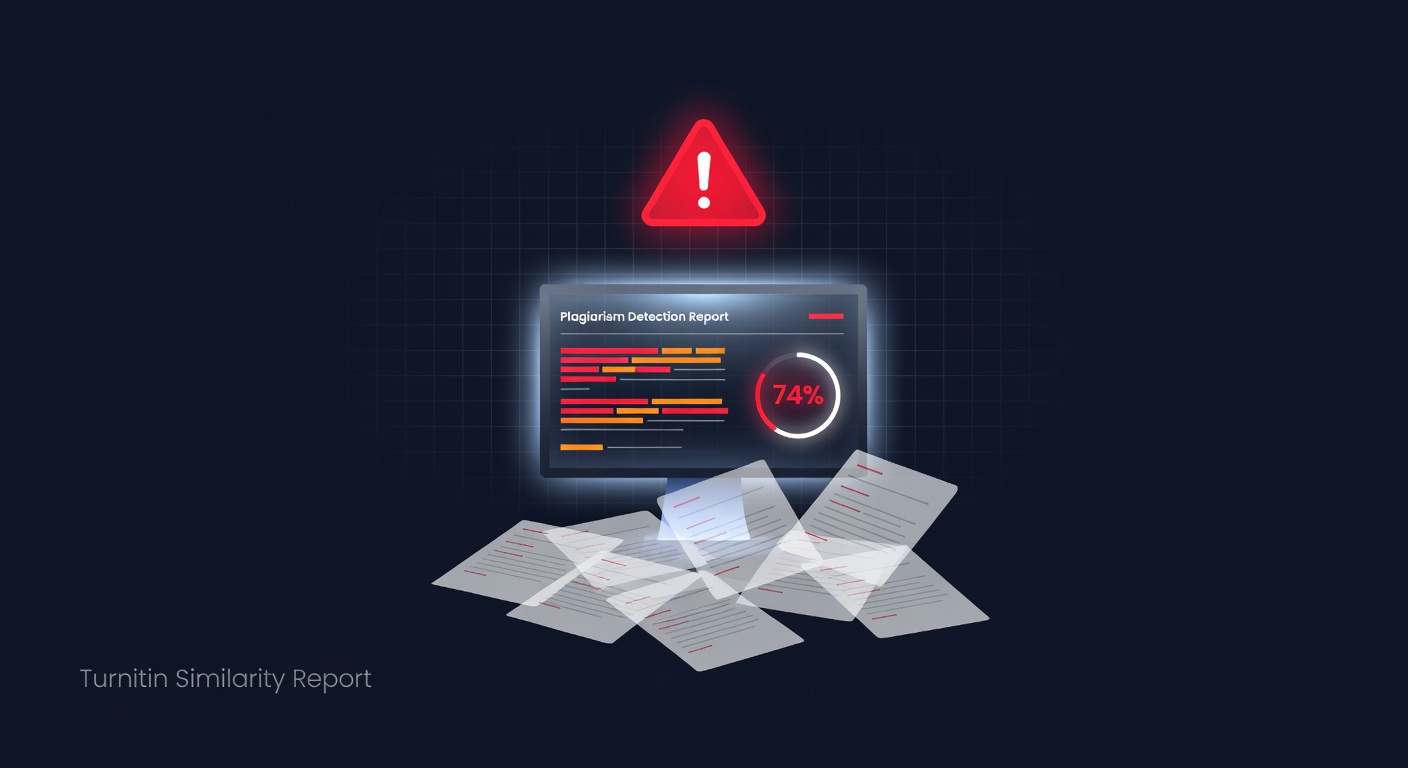
Universities run every dissertation through plagiarism detection software before it reaches an examiner. A high similarity score can result in a range of consequences depending on the severity and the institution — from mandatory resubmission and capped grades to formal academic misconduct proceedings and, in the most serious cases, expulsion from the programme entirely.
Self-plagiarism is also worth noting. Reusing substantial portions of your own previously submitted work without proper attribution is considered plagiarism at most universities — even though many students are genuinely surprised to learn this.
The most effective way to protect yourself is to develop strong academic writing habits from the beginning of your dissertation process. Always cite your sources at the point of use, paraphrase in your own words and voice rather than rearranging the original sentence structure, and use quotation marks for any direct quotes regardless of how short they are. Before submission, run your completed dissertation through a plagiarism checker such as Turnitin or Grammarly Premium and review every flagged section carefully. Do not wait for your university to find the problem — find it yourself first.
8. Poor Time Management and Late Submission
A dissertation is not an assignment you can leave until the last few weeks and still expect to pass. It is a months-long academic project that requires sustained focus, consistent effort, and careful planning at every stage — and poor time management is one of the most common dissertation mistakes that students across every level of study repeatedly fall into.
The problem rarely starts with laziness. Most students begin their dissertation with good intentions and a genuine belief that they have enough time. What they underestimate is how long each individual stage actually takes. A literature review that a student expects to complete in two weeks often takes four. Data collection runs into delays. Analysis takes longer than anticipated. And by the time the writing stage arrives, the deadline is already uncomfortably close.
The result is a rushed dissertation — one where the literature review is thin, the methodology is underdeveloped, the analysis lacks depth, and the conclusion feels like an afterthought. Examiners can tell when a dissertation has been written under pressure. The drop in quality between chapters is visible, and it costs marks across the board.
Late submission compounds the problem further. At most universities, submitting even a few hours past the deadline results in automatic mark deductions — typically five marks per day at UK institutions. Some universities will not accept a late submission at all without prior approval of an extension. A dissertation that might have achieved a merit or distinction can drop to a pass — or a fail — purely because of a missed deadline.
The solution is straightforward but requires genuine commitment from the very start. Create a detailed dissertation timeline on the first day you receive your brief. Break the entire project down into individual stages — topic selection, literature search, methodology planning, data collection, analysis, writing each chapter, editing, proofreading, and final formatting. Assign a realistic deadline to each stage and build in at least one to two weeks of buffer time for unexpected delays, because they will happen without exception.
Treat your self-imposed deadlines as seriously as your university submission date. Share your timeline with your supervisor so they can hold you accountable. And if you find yourself falling behind early — address it immediately rather than hoping to catch up later.
9. Weak Conclusion That Does Not Answer Research Questions
Your conclusion is your final opportunity to demonstrate to your examiner that your dissertation achieved exactly what it set out to do. After thousands of words of research, analysis, and argument, the conclusion is where everything comes together — and a weak one can undo a significant amount of the good work that came before it.
This is one of the most frustrating common dissertation mistakes from an examiner’s perspective, because it suggests that the student lost sight of their original research questions somewhere in the middle of the writing process. A conclusion that simply summarises each chapter in sequence without directly answering the research questions is not a conclusion — it is a repetition. And repetition does not earn marks.
Many students also make the mistake of introducing new information or new arguments in their conclusion. This is a fundamental structural error. Your conclusion is not the place to raise new ideas — it is the place to bring existing ones to a clear, decisive close.
A strong conclusion does five things clearly and confidently. It restates the original research questions without copying them word for word from the introduction. It summarises the key findings of the study and explains directly how those findings answer each research question. It acknowledges the limitations of the research honestly and without undermining the validity of the entire study. It identifies specific areas where future research could build on or extend the work. And it ends with a final statement that reinforces the significance and contribution of the dissertation as a whole.
If your conclusion cannot do all five of those things, it needs to be rewritten before submission. A rushed, vague, or structurally weak conclusion tells your examiner that the student either ran out of time or never fully understood what their dissertation was trying to achieve — and neither of those impressions is one you want to leave as your final word.
10. Skipping Proofreading and Editing
After months of researching, planning, and writing, most students reach the end of their dissertation feeling exhausted and relieved in equal measure. The temptation at that point is to submit immediately — to finally be done with it. And that temptation is exactly what leads to one of the most avoidable common dissertation mistakes of all.
Submitting without thorough proofreading and editing is a mistake that costs students marks they genuinely earned through months of hard work. Grammatical errors, spelling mistakes, inconsistent terminology, unclear sentence structures, poorly constructed paragraphs, and formatting inconsistencies all affect the readability of your dissertation — and readability directly affects your grade. An examiner reading a dissertation littered with surface errors will unconsciously begin to question the academic rigour of the research itself, even if the research is genuinely strong.
The problem is compounded by the fact that proofreading your own work immediately after finishing it is largely ineffective. After spending months immersed in the same document, your brain automatically fills in what it expects to see rather than what is actually on the page. Errors that are obvious to a fresh reader become completely invisible to the writer who produced them.
The most effective approach is to step away from your dissertation completely for at least 48 hours after finishing your final draft. Return to it with fresh eyes and read it slowly — ideally out loud — so that awkward phrasing and grammatical errors become easier to catch. Print it out if possible, because errors that are missed on screen are often caught more easily on paper.
Beyond self-editing, ask a trusted peer, academic contact, or professional proofreading service to review your work before submission. A second pair of eyes will almost always catch errors you missed, identify sections that lack clarity, and flag inconsistencies in tone or terminology that have crept in across different writing sessions.
Your dissertation represents months of effort and significant academic investment. Submitting it without proper proofreading is the equivalent of running a marathon and stopping ten metres before the finish line. The work is done — do not let avoidable surface errors be the reason your grade falls short of what your research deserved.
Undergraduate Dissertation Mistakes vs Postgraduate

Not all dissertation mistakes carry the same weight — and the errors that typically fail an undergraduate student are often quite different from those that bring down a postgraduate. Understanding where your specific level of study is most vulnerable gives you a significant advantage going into the writing process.
Where Undergraduates Go Wrong Most
For most undergraduate students, a dissertation is the longest and most complex piece of academic writing they have ever attempted. The jump in expectation from a standard essay or coursework assignment is significant — and many undergraduates underestimate just how different the dissertation process actually is until they are already deep into it.
The most common dissertation mistakes at undergraduate level centre around the foundational elements of academic research. Topic selection is a frequent early stumbling block — many undergraduates choose topics that sound interesting but lack sufficient academic literature, or they choose topics that are far too broad to address meaningfully within their word count. Literature review structure is another consistent weakness, with many undergraduates defaulting to descriptive summaries rather than the critical analysis their examiners are looking for.
Referencing is also disproportionately problematic at undergraduate level. Many students arrive at university with limited experience of formal academic citation and never fully develop the discipline of accurate, consistent referencing before their dissertation submission date arrives.
Why Master’s Students Still Fail
Postgraduate students generally enter their dissertation with stronger academic foundations — but that experience can work against them in ways they do not always anticipate. Overconfidence is one of the most significant factors in master’s level dissertation failure. Students who performed well in their undergraduate degree sometimes approach their postgraduate dissertation with less caution than the work actually demands, skipping supervisor feedback sessions, underestimating the depth of critical analysis required, and leaving insufficient time for editing and proofreading.
At master’s level, examiners expect a significantly higher standard of independent critical thinking, methodological rigour, and original contribution to the field. A dissertation that might have received a solid pass at undergraduate level will fall short of the postgraduate standard if it does not demonstrate those qualities clearly and consistently throughout.
According to available estimates, between 5 and 10 percent of master’s dissertations fail — a figure that surprises most students, because universities rarely advertise it openly. The consequences of failure at postgraduate level are also more significant, with resubmission windows often shorter and the impact on professional and academic progression considerably greater.
How Many Students Fail Their Dissertation?
The dissertation failure rate is significantly higher than most universities openly advertise — and understanding the real numbers can be a powerful motivator for taking the process more seriously from the very beginning. Many students walk into their dissertation assuming that failure is something that happens to other people. The data tells a different story.
UK Dissertation Failure Rate — The Real Numbers
Research conducted among over 26,000 university students in the UK found that 19.5% fail their dissertation. That is nearly one in five students — a figure that puts the scale of the problem into stark perspective. For a lecture hall of 200 dissertation students, that statistic means approximately 39 of them will not pass.
The failure rate varies by level of study. At undergraduate level, the numbers fluctuate depending on the institution and subject area. At master’s level, between 5 and 10 percent of dissertations fail — which may sound lower, but the consequences at postgraduate level are considerably more severe. At PhD level, the failure rate sits between 1 and 3 percent, but a failed PhD dissertation can represent years of work and significant financial investment lost in a single outcome.
Why the Failure Rate Is Higher Than You Think
The reason these numbers come as a surprise to most students is simple — universities do not prominently publicise them. Dissertation failure is not discussed openly during induction weeks or in course handbooks. Students are given guidelines and deadlines, but rarely given a clear picture of how many of their peers will not make it through the process successfully.
What makes the failure rate even more significant is the nature of the failures themselves. The overwhelming majority of dissertation failures are not caused by a lack of intelligence, subject knowledge, or genuine academic ability. They are caused by the same avoidable common dissertation mistakes covered throughout this guide — poor planning, weak structure, inadequate research design, inconsistent referencing, and a failure to engage with supervisor feedback at the right moments.
That means the vast majority of dissertation failures are preventable. Not through exceptional talent or academic brilliance — but through awareness, preparation, and the willingness to seek support when it is needed.
Can I Still Graduate If I Fail My Dissertation?
Failing your dissertation is a deeply stressful experience — but it does not automatically mean the end of your degree. The outcome depends on several factors including your university’s specific policies, your programme requirements, and the nature and severity of the failure itself. Understanding what happens next is important, because the decisions you make immediately after receiving a failing grade can significantly affect your final outcome.
What Happens After a Dissertation Failure
The immediate consequence of a failed dissertation varies from institution to institution. At most UK, Australian, and Canadian universities, students who fail their dissertation are contacted by their department and informed of the specific reasons for the failure, along with the options available to them going forward.
In many cases, students are permitted to continue toward their degree while their dissertation situation is being resolved — particularly at undergraduate level where the dissertation is one component of a broader final year assessment. However, at postgraduate level, the dissertation typically carries significantly more weight in the overall degree classification, meaning a failure has a more direct and immediate impact on whether a student can graduate at all.
Some universities will award a lower qualification in place of the intended degree if a student fails their dissertation and does not resubmit — for example, awarding a Postgraduate Diploma instead of a Master’s degree. This outcome allows the student to leave with a recognised qualification, but not the one they enrolled and paid for.
Resubmission — Is It Possible?
In most cases, yes — but the conditions attached to resubmission are important to understand clearly before assuming it is a straightforward second chance.
Most universities allow one resubmission attempt following a failed dissertation. The resubmission window typically ranges from a few weeks to several months depending on the institution and the level of study. During this period, students are expected to address every point of examiner feedback thoroughly and resubmit a significantly improved piece of work.
The critical detail that many students overlook is that resubmitted dissertations are almost always subject to a grade cap. Regardless of how strong your resubmission is, the maximum grade you can receive is typically capped at the minimum passing mark — meaning a resubmission can get you through, but it cannot recover the grade your original submission failed to achieve.
This is why avoiding these common dissertation mistakes in your first submission is always the smarter and more effective approach. A strong first submission keeps every grade outcome open. A resubmission, even a successful one, closes most of them.
How to Avoid These Dissertation Mistakes

Knowing what the most common dissertation mistakes are is only half the battle. The other half is building the right habits, structures, and support systems around your work early enough to actually make a difference. Awareness without action changes nothing — and the students who consistently produce strong dissertations are not necessarily the most talented in their cohort. They are the most prepared.
Start Early and Create a Clear Timeline
The single most effective thing you can do to protect the quality of your dissertation is to start earlier than you think you need to. Not slightly earlier — significantly earlier.
A dissertation is not a linear process where one stage neatly finishes before the next begins. Literature searching continues while you are writing your methodology. Data collection throws up unexpected complications that force you back to your research design. Writing one chapter often reveals gaps in another. All of this takes time — more time than any student anticipates at the outset.
Create a detailed dissertation timeline on the first day you receive your brief. Map out every individual stage of the process — topic selection and approval, literature searching, methodology planning, ethical approval if required, data collection, data analysis, writing each chapter, editing, proofreading, and final formatting checks. Assign a realistic deadline to each stage, then add a buffer of at least one to two weeks between your personal completion target and your actual submission date. That buffer is not wasted time — it is your insurance against the unexpected delays that every dissertation student encounters.
Get Supervisor Feedback at Every Stage
Your dissertation supervisor is one of the most valuable resources available to you throughout this process — and one of the most underused. Many students make the common dissertation mistake of treating supervisor meetings as a formality rather than a genuine opportunity to strengthen their work.
Do not wait until an entire chapter is finished before sharing it with your supervisor. Share early drafts, share your methodology plan before you begin data collection, share your literature review outline before you commit to a structure. The earlier your supervisor can identify a problem with your approach, the easier and less costly it is to fix.
Supervisor feedback at the outline stage takes an hour to implement. The same feedback received after three weeks of writing takes days. Use your supervisor proactively, respond to their feedback thoroughly, and treat every meeting as a checkpoint that keeps your dissertation on the right track.
Get Professional Dissertation Support
There are times when supervisor guidance alone is not enough — and recognising that early is a sign of academic maturity, not weakness. Many students are managing coursework, part time employment, and significant personal commitments alongside a dissertation that demands sustained focus over an extended period. In those circumstances, professional dissertation support can make a measurable difference to the quality and confidence of your final submission.
At AssignProSolution, our expert team has helped hundreds of students across the UK, Australia, and Canada navigate exactly these challenges. Whether you need help structuring your literature review, strengthening your methodology, improving the clarity and flow of your writing, or a thorough professional review of your completed dissertation before submission — our specialists are here to support you at every stage of the process.
Getting the right support early is always more effective than seeking help in the final days before your deadline. If you are struggling with any aspect of your dissertation — or simply want the reassurance that your work is as strong as it can be before you submit — get in touch with our team today.
Frequently Asked Questions
What are the most common dissertation mistakes?
The most common dissertation mistakes include choosing a research topic that is too broad or too narrow, writing a weak or vague thesis statement, producing a literature review that summarises rather than critically analyses existing research, using a flawed or poorly justified research methodology, ignoring university formatting guidelines, and submitting without thorough proofreading and editing. Most of these mistakes are entirely avoidable with proper planning, early supervisor engagement, and the right academic support throughout the process.
Why do students fail their dissertation?
Students most commonly fail their dissertation due to a combination of poor planning, weak research design, inadequate critical analysis, inconsistent referencing, and a failure to follow university guidelines on formatting and submission. In the majority of cases, dissertation failure is not caused by a lack of intelligence or subject knowledge — it is caused by avoidable structural and procedural mistakes that could have been addressed at an earlier stage of the process with the right guidance and support.
What makes a good dissertation?
A good dissertation begins with a clearly defined, well-scoped research topic and a strong, specific thesis statement. It demonstrates a thorough and critically engaged literature review, a justified and appropriate research methodology, findings that directly address the original research questions, and a conclusion that ties everything together with clarity and confidence. Consistent and accurate referencing, clean academic writing, and meticulous attention to formatting and presentation are equally important components of a dissertation that earns strong marks.
Can I get help with my dissertation?
Yes — and seeking support early is always the most effective approach. Professional dissertation services like AssignProSolution provide expert guidance across every stage of the dissertation process, from topic selection and literature review structuring through to methodology support, editing, and proofreading. Our team has helped hundreds of students across the UK, Australia, and Canada produce dissertations that meet the highest academic standards. Whether you need targeted support with one specific chapter or a comprehensive review of your completed dissertation before submission, we are here to help.
Conclusion
Dissertation failure is rarely the result of one catastrophic mistake. It is the result of several smaller, avoidable errors that quietly accumulate across months of work — in the research design, the literature review, the referencing, the formatting, and the final submission process.
The 10 common dissertation mistakes covered in this guide are not rare or unusual. They are the same errors that examiners flag year after year, across universities in the UK, Australia, and Canada. The students who avoid them are not necessarily more talented — they are more prepared, more proactive, and more willing to seek support when they need it.
Start early. Follow your university guidelines. Engage your supervisor at every stage. And if you ever feel like you are falling behind or losing direction, do not wait until the deadline is days away to ask for help.
Need expert dissertation help? Our team at AssignProSolution has helped hundreds of students across the UK, Australia, and Canada submit dissertations that get real results. Whether you need support with your literature review, methodology, or a full professional review before submission — we are here. Get in touch with us today.